

























































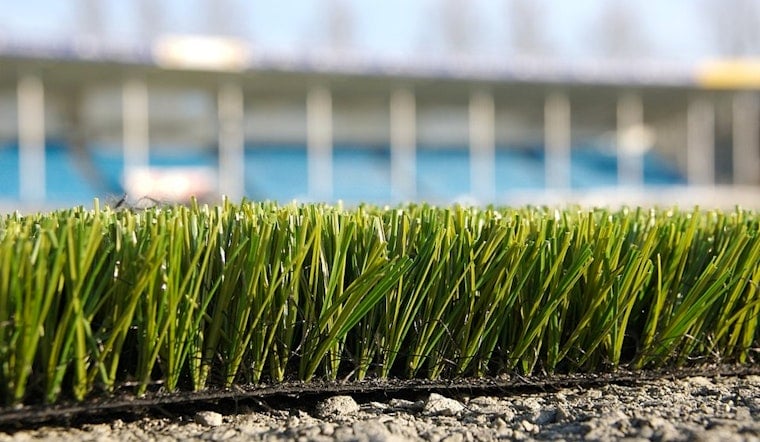
Los Angeles Unified is locked in a very 21st-century turf war: should its high school athletes be running on plastic or playing on real grass? The district has kicked off a head-to-head study of the two options and is holding regional hybrid meetings through mid-May as it prepares to replace seven worn-out fields. On the table are competing worries about extreme heat, chemicals, and lost green space versus arguments about water savings, lower maintenance, and fields that can be used nearly nonstop. Parents, students, and sports groups are being asked to help sort out those trade-offs.
Which fields are in play
As reported by LAist, the first round of replacements will cover seven high school campuses: Roybal Learning Center, Sonia Sotomayor Art & Sciences Magnet, Cesar E. Chavez Academies, Fremont, Marquez, Maya Angelou Community High School, and University High School Charter. Together, those schools serve roughly 10,000 students, and how their fields are rebuilt is expected to influence future projects across the district. Staff says findings from the comparison study, due this summer, will guide whether LAUSD leans toward synthetic turf or sticks with natural grass.
Board action launched the review
The new review traces back to a unanimous November 18, 2025, school board resolution that ramped up heat-mitigation work and ordered a comprehensive look at synthetic turf versus natural grass, according to an LAUSD press release. That action also aimed to "prohibit new artificial turf installations at early education, elementary, and middle schools" while concentrating the formal comparison on high school athletic fields. Board members framed the move as part of a broader effort to cool campuses and target investments in historically underserved neighborhoods.
Health and heat worries
Public-health researchers and parent advocates have zeroed in on three core concerns with artificial turf: surface temperatures that can soar high enough to cause burns, potential chemical exposures such as PFAS and other additives, and possible differences in injury patterns, the Los Angeles Times reported. Research cited in that coverage documented turf-surface temperatures that, under certain conditions, exceeded 160 degrees - hot enough to cause first- or second-degree burns. Those findings have helped drive community groups and local officials to insist that LAUSD take a very careful look before it commits to any one approach.
State review finds limited chemical risk
At the state level, California's Office of Environmental Health Hazard Assessment released a final synthetic-turf report on March 5, 2026, that concluded it found no significant health risks to players, referees, coaches, or spectators from chemicals in crumb-rubber infill in the exposure scenarios it evaluated. OEHHA's assessment focuses on specific exposure pathways and toxicology results, and its findings have been interpreted in different ways by advocates and some scientists who argue that questions remain about newer turf products and long-term effects. That split in how the evidence is read is one reason LAUSD is treating the decision as both a technical call and a community choice.
How the district will measure trade-offs
To sort through the options, LAUSD has hired consultants LPA and Core America to complete environmental and safety analyses and to help run the public-engagement process, officials told the board during a recent presentation. Staff says the study will compare turf and grass on playability, health and safety, environmental impacts, lifecycle costs, and maintenance. District leaders said they expect to wrap up stakeholder engagement by mid-May, finish the study in June, and bring recommendations back to the board this summer for potential policy direction.
How to weigh in
The district is hosting four regional hybrid community meetings through mid-May and circulating a districtwide survey for families, students, and local organizations, LAist reports. Questions can be directed to LAUSD's facilities community-relations line at (213) 241-1340, and officials say they will also convene stakeholder workshops for more technical input. With both state findings and neighborhood concerns in the mix, LAUSD's upcoming decision is shaping up as a closely watched test of how big-city districts balance cooling, equity, cost, and playability on their high school fields.





