

























































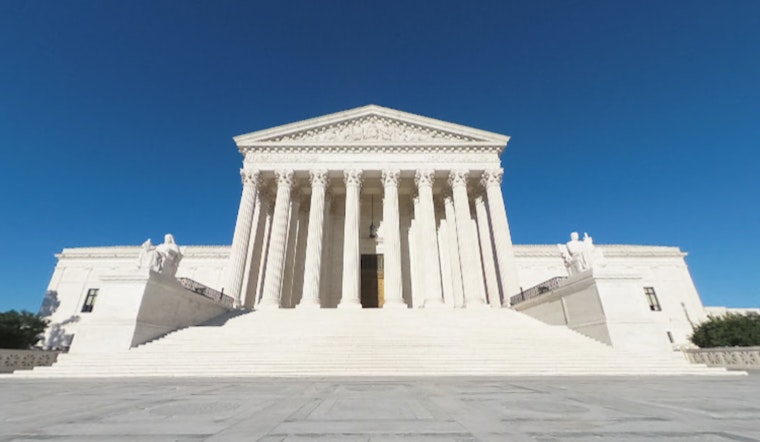
The U.S. Supreme Court heard oral argument on Wednesday in a closely watched patent fight over the heart drug Vascepa, a clash that could reset how generic drugmakers talk about their products and, in turn, what patients pay at the pharmacy counter. At the center of the dispute is a deceptively simple question: can routine investor calls, press releases and website language by a generic company count as unlawful “inducement” when the company’s FDA label leaves out the patented use?
How the case reached the high court
The case, Hikma Pharmaceuticals USA Inc. v. Amarin Pharma Inc., climbed back onto the federal courts’ radar in 2024 when the U.S. Court of Appeals for the Federal Circuit revived Amarin’s lawsuit after a Delaware judge had tossed it in 2022. The appeals court said Hikma’s public statements, including press releases that described its product as a “generic Vascepa” and highlighted total Vascepa sales, could plausibly have encouraged doctors to write prescriptions that infringed Amarin’s patents. That was enough to send the case into discovery, according to Justia.
What skinny labels are meant to do
Under the Hatch‑Waxman framework, a “skinny label” is supposed to be a surgical tool. It lets a generic company seek FDA approval for uses that are not covered by a brand‑name patent while carving out the patented indications, so lower‑cost versions can reach patients sooner without stepping on live patents. Vascepa first won approval to treat severe hypertriglyceridemia, then later picked up an additional cardiovascular indication. Hikma’s abbreviated new drug application was cleared with a skinny label limited to the non‑patented use, and that regulatory backdrop is now in front of the justices, according to the Legal Information Institute.
What the companies told the justices
Amarin argues that Hikma went past what a lawful skinny label allows. In its telling, Hikma’s label, combined with its marketing materials, effectively pointed physicians toward prescribing for the patented cardiovascular use, undercutting Amarin’s hard‑won patent protections. Hikma, for its part, insists that its investor communications and website language were accurate descriptions of its product and standard commercial speech. Accept Amarin’s theory, Hikma warns, and the skinny‑label pathway will be gutted, with generic competitors thinking twice before entering the market at all, as reported by Bloomberg Law.
Arguments in briefs and outside filings
In its merits brief, Hikma leans hard on the policy consequences. If routine marketing and investor updates can be repackaged as evidence of inducement, the company says, skinny labels will become legally hazardous for generics and competition will suffer. The brief pulls together empirical studies and policy analysis to make that point, as detailed in Hikma's Supreme Court brief.
Outside players have weighed in too. Amici and academic researchers highlight data showing that skinny‑label competition has already produced real‑world savings. One analysis in a major medical journal estimated that biosimilar skinny‑label entry translated into billions of dollars in Medicare savings, a public‑health backdrop the briefs repeatedly cite, according to JAMA Internal Medicine.
Money - and access - on the line
The dollars at stake are substantial for the companies and potentially for patients. Amarin reported total revenue of about $213.6 million for the year that ended Dec. 31, 2025, largely tied to Vascepa sales. Industry groups and lawyers caution that if it becomes easy to bring inducement lawsuits after a generic launches, companies may pull back on marketing or delay launches altogether. That kind of chilling effect could keep prices higher for patients and insurers, according to coverage and analysis on SCOTUSblog.
What to watch next
The federal government has signaled that it sees the broader stakes here. The Solicitor General filed an amicus brief and the government shared oral argument time with the parties, something reflected in the court’s argument calendar. Observers are watching to see how the justices try to draw a line between a clear, predictable rule for inducement and the long‑standing policy goal of encouraging robust generic competition. Lawyers are especially attuned to whether the court favors a bright‑line safe harbor for certain kinds of communications or a more flexible, fact‑heavy “totality of the circumstances” test, as indicated in the court’s schedule on the Supreme Court.
Why the ruling matters
If Amarin wins, brand‑name drugmakers could find it easier to sue generic rivals after launch and could gain more leverage over how those rivals describe their products to the public. A victory for Hikma would shore up the skinny‑label pathway that has already delivered cheaper alternatives in a range of markets. For more on the arguments and the legal cross‑currents in play, see reporting by Reuters.





