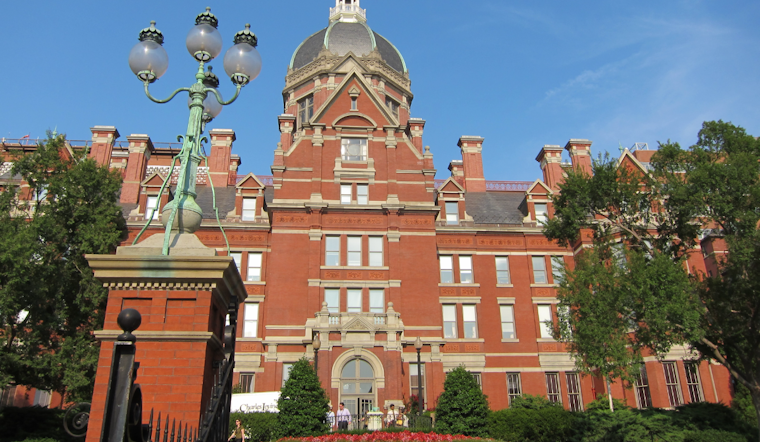
Johns Hopkins University is facing a federal complaint that accuses the school of repeatedly failing to properly care for animals used in research at its Baltimore facilities. The filing, pulled together by an animal welfare watchdog from government inspection reports and internal university documents, urges federal regulators to investigate alleged breakdowns in surgical aftercare, recordkeeping, and oversight at one of the country’s most prominent research hubs.
Stop Animal Exploitation Now (SAEN), an Ohio-based group, lodged the complaint with the U.S. Department of Agriculture and based its claims on USDA inspection records and internal Hopkins documents, according to The Baltimore Sun. The group is asking regulators to launch a formal probe and to seek the maximum penalties allowed under federal law, arguing that the records show repeated protocol breaches at Hopkins’ Baltimore research sites.
What USDA records show
Central to the complaint is a Feb. 23 APHIS inspection report that cites a “critical” lapse by the university’s Institutional Animal Care and Use Committee (IACUC). According to the report, a marmoset developed an abscess under a cranial headcap and was later euthanized. The inspection notes that the last documented headcap cleaning occurred on March 12, 2025, and that the animal was euthanized on May 5, 2025. The protocol in question (MARM383) required margin flushes every 7 to 10 days. Inspectors wrote that the problem had been “corrected prior to the inspection.” The inspection memo is available from PETA as a USDA inspection report (PDF).
Johns Hopkins' response
In a statement to The Baltimore Sun, a Johns Hopkins spokesperson said the university self-reported the incidents to regulators and implements corrective action when problems occur. “Johns Hopkins is committed to both ethical animal care and the advancement of humane scientific innovation to benefit society,” the statement said. The university also directs the public to its animal care and enrichment standards outlined on its Research Animal Resources pages.
Past inspections and penalties
The school’s animal research program has drawn federal scrutiny before. A Nov. 1, 2023, APHIS “Citation and Notification of Penalty” details multiple alleged violations from 2021 to 2023, including escaped or injured primates, inadequate post-surgical monitoring, and lapses in required daily observations, and assessed a $12,300 penalty. The enforcement document appears on the USDA APHIS website as the Citation and Notification of Penalty (PDF).
Legal implications
In the latest complaint, SAEN is urging regulators to pursue the highest fines available. Under the USDA’s 2025 inflation adjustment rule, the civil penalty for a violation of the Animal Welfare Act can reach up to $14,575 per count. The USDA’s Animal and Plant Health Inspection Service is responsible for enforcing the Animal Welfare Act, while the NIH Office of Laboratory Animal Welfare (OLAW) oversees compliance with Public Health Service policy for NIH-funded studies, meaning one complaint can trigger multiple layers of federal review. If investigators conclude that Hopkins significantly violated the rules, potential outcomes include fines, restrictions on licenses, mandated corrective measures, and required reporting to grant sponsors.
USDA officials have not yet said whether they will open a formal investigation. The agency typically reviews complaints alongside its own inspection history before deciding how to proceed. Johns Hopkins maintains that it has corrected the problems cited in federal reports and says it will cooperate with regulators, while SAEN has signaled it will continue pressing for full enforcement if violations are found.