

























































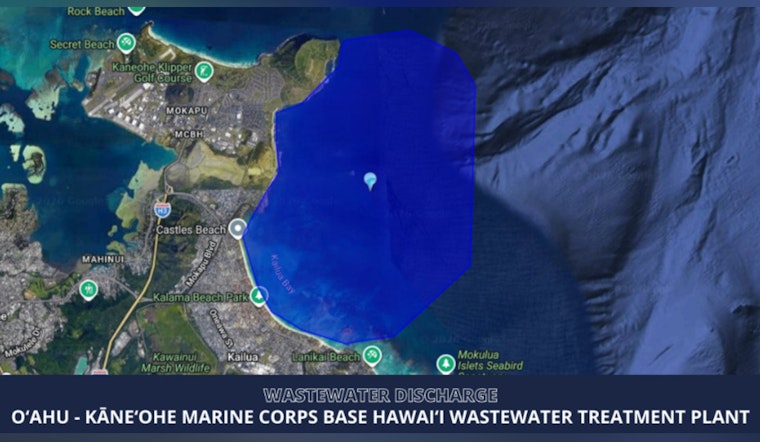
State health officials on Sunday urged beachgoers to stay out of the water near the Kāneʻohe Marine Corps Base Hawaiʻi wastewater treatment plant ocean outfall after routine sampling found a discharge above the daily maximum permitted level for fecal indicator bacteria. The warning covers a string of popular windward Oʻahu shoreline spots, including Secret Beach, Rock Beach, Lanikai Beach, Kailua Bay and Castles Beach. Testing and monitoring are still underway while officials review follow up samples, and local lifeguards and agencies are telling swimmers, paddlers and surfers to take the advisory seriously.
DOH advisory and affected spots
According to the Hawaiʻi State Department of Health, the Clean Water Branch advised the public to avoid waters near the Kāneʻohe wastewater treatment plant ocean outfall after an effluent sample exceeded the permitted daily limit for fecal indicator bacteria. The advisory specifically calls out Secret Beach, Rock Beach, Lanikai Beach, Kailua Bay and Castles Beach as locations to steer clear of while officials review results from shore and outfall monitoring stations. DOH guidance stresses avoiding contact with the listed waters until follow up tests confirm levels have returned to within permit limits.
Where the discharge came from
The discharge is linked to the base’s Water Reclamation Facility, which treats sewage generated at MCB Hawaii and pumps treated effluent to a deep ocean outfall that releases into Kailua Bay, according to Marine Corps Base Hawaii environmental materials. Base public advisories explain that the outfall mixes with treated effluent from the City and County of Honolulu Kailua Regional Wastewater Treatment Plant about two miles offshore at depths of roughly 100 to 110 feet. The installation has been pursuing upgrades intended to improve disinfection and add redundancy at the reclamation facility.
Health risks and guidance
Elevated levels of fecal indicator bacteria such as Enterococci can signal possible contamination from sewage or animal waste and are used to judge recreational water safety, the U.S. Environmental Protection Agency notes. The Hawaiʻi Department of Health Clean Water Branch keeps an online list of active advisories and sampling results and is the main source for updates on when it is safe to get back in the water. As with other advisories, officials recommend avoiding swimming, surfing or any other direct contact with affected waters until DOH formally lifts the notice.
Context and regulatory history
MCBH has issued similar wastewater exceedance notices this year and received state action tied to earlier plant operations, according to the base’s public advisories. Local reporting has also detailed past exceedances and enforcement actions involving the Kailua Regional Wastewater Treatment Plant, including earlier fines and moves toward installing ultraviolet disinfection at the city facility. A recent series of storm related brown water and discharge events across Oʻahu has led to stepped up sampling and infrastructure upgrades by multiple operators.
Where to get updates
For the latest advisories and shoreline sampling results, beachgoers can check the Hawaiʻi Department of Health Clean Water Branch portal along with the base’s public advisories page before heading into Kailua Bay or nearby beaches. Officials also urge residents and visitors to follow lifeguard postings and other official updates. Notices will be updated once follow up testing shows bacteria levels have dropped back within permit limits.





