

























































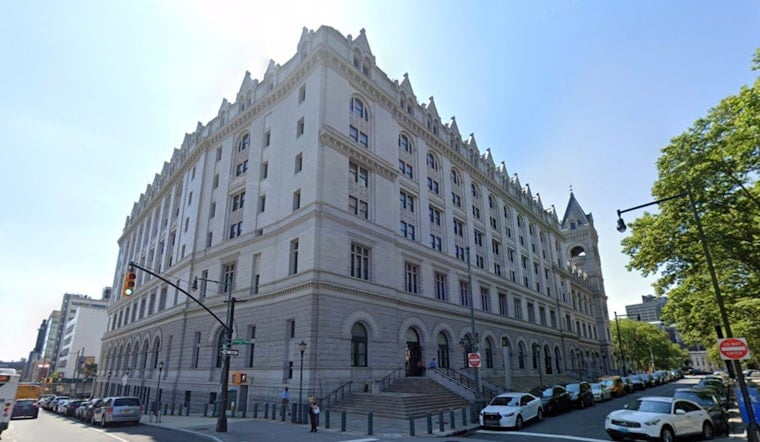
A federal jury in Central Islip on Thursday convicted three Crips members in a far-reaching racketeering case that prosecutors say tied together multiple murders, shootings, kidnappings and fraud schemes stretching from Long Island to Brooklyn. After an 11-week trial, the panel found Akeem Chambers, Jonathan Vazquez and Jerell Shaw guilty and left each man facing the possibility of spending the rest of his life in federal prison. Prosecutors framed the case as the capstone to years of gang violence that had neighborhoods exhausted and on edge.
Jurors returned guilty verdicts on 52 counts, including racketeering, murder, attempted murder, robbery, kidnapping and wire-fraud conspiracy, according to the U.S. Attorney’s Office for the Eastern District of New York. Prosecutors identified the defendants as members of two Crips sets, the Insane Crip Gang (ICG) based on Long Island and the Rollin’ 60s in Brooklyn, and the convictions followed an 11-week trial before U.S. District Judge Joan M. Azrack. When they are sentenced, each man faces a maximum term of life in prison.
What the jury found
During the trial, prosecutors told jurors that Chambers, 24, opened fire in at least eleven shootings and was convicted in three homicides between 2020 and 2022, including the killing of Thiasia Williams in Hempstead and the March 2022 shooting death of Malik Delima in Brooklyn. Vazquez was convicted for his role in the 2016 Hempstead murder of Joecephus Vanable and for trying to shoot two Nassau County police officers during a traffic stop in March 2022. Shaw, according to prosecutors, recruited associates for kidnappings and luxury-goods robberies and later pulled Chambers into a plot that ended with Delima’s murder, according to the U.S. Attorney’s Office for the Eastern District of New York on X.
Pandemic fraud and money laundering
Jurors also heard evidence that members of the same gang turned to pandemic-era fraud, using stolen identities to file bogus unemployment claims in multiple states and then washing the proceeds through bank transfers and sham business accounts. Prosecutors said the fraud both enriched the defendants personally and bankrolled further violence. Shaw, who prosecutors said used the nickname “Rells Fargo,” alone defrauded the California Employment Development Department of more than $2 million and used illicit funds to buy a $1.2 million home, according to the U.S. Attorney’s Office for the Eastern District of New York. Financial records, wire transfers and social-media posts linked the unemployment money to purchases that prosecutors argued helped sustain the criminal enterprise.
Sentencing and next steps
The case is docketed in the Eastern District of New York as 23-CR-157 (S-3), and sentencing dates have not yet been scheduled. Prosecutors and local officials have cast the verdict as a major break in a cycle of gang violence across Nassau County and Brooklyn and pointed to it as proof of deep coordination among the FBI, local police departments and federal prosecutors, according to a post by the U.S. Attorney’s Office for the Eastern District of New York on X. Defense attorneys can still file post-verdict motions and, if those are denied, the case will move into sentencing hearings where the judge will weigh federal sentencing guidelines along with victims’ impact statements.
Legal implications
Because the convictions include both racketeering and murder counts, each defendant faces possible life imprisonment and federal restitution orders. By charging the case under the Racketeer Influenced and Corrupt Organizations Act, or RICO, prosecutors were able to present a single overarching criminal enterprise that tied together shootings, robberies, kidnappings and pandemic fraud. That approach can significantly raise the legal stakes for defendants, while also giving jurors a clearer view of the broader pattern of violence and money that prosecutors say held the operation together.





