

























































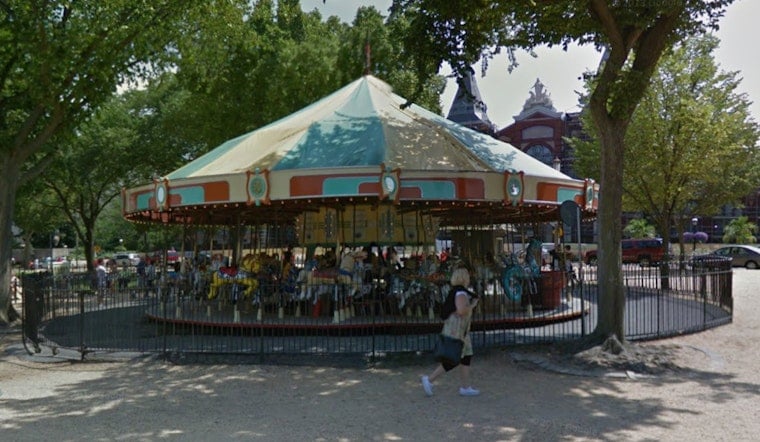
The Smithsonian’s restored National Carousel is back in action on the National Mall, welcoming riders again on April 24, 2026, after a multiyear conservation project. Its wooden horses started life at Gwynn Oak Amusement Park outside Baltimore, where activists fought to desegregate the park in 1963 and Black and white children finally rode together on August 28 of that year. Now parked in front of the Arts and Industries Building, the ride offers family fun along with a quiet history lesson every time it turns.
Restoration and return
According to the Smithsonian Institution, the carousel’s recent overhaul was handled by Carousels and Carvings, an Ohio-based conservation firm, which repaired and refinished the ride before its April 24 unveiling as part of America’s 250th anniversary celebrations. The Smithsonian notes the carousel had been closed since 2023 for preservation work that sent the animals, platform and internal mechanism off-site for stabilization and fresh paint. Passes are sold at the on-site ticket booth during the Mall’s regular 10 a.m. to 5 p.m. hours, the institution says.
From Gwynn Oak to the Mall
The larger carousel now spinning on the Mall was originally built in 1947 for Gwynn Oak Amusement Park and moved to Washington in 1981. Its civil rights legacy took shape in the early 1960s, when activists and families pressed for the park’s integration. On August 28, 1963, 11-month-old Sharon Langley became the first Black child to ride after the gates opened to everyone, and a restored “Freedom Riders” horse now carries her name alongside images of civil rights leaders, as detailed by Smithsonian Magazine. Smithsonian Secretary Lonnie Bunch III has called the carousel an object of “joy and wonder” that also shows what can happen “when people demand America live up to its ideal.” The commemorative touches are meant to keep that story spinning for every new rider.
What to know before you go
The ride operates daily from 10 a.m. to 5 p.m., and the per-ride cost is $6, so visitors should be ready to pay at the ticket booth with cash or card, according to The Washington Post. There is no reservation system, which means lines are likely to grow on busy spring and summer days. Neighbors and civil rights veterans who turned out for the reopening told local reporters that the refurbished carousel is both a welcome family attraction and a meaningful piece of civic history.
Programming around the big day included a book signing with author Amy Nathan at the National Museum of African American History and Culture, according to the museum’s event listing, tying the festivities to the carousel’s role in the integration of Gwynn Oak and to the Smithsonian’s 250th anniversary activities. With its return, the carousel offers a ride that doubles as a reminder, inviting visitors to enjoy the horses while taking in the story painted into their flanks.





