

























































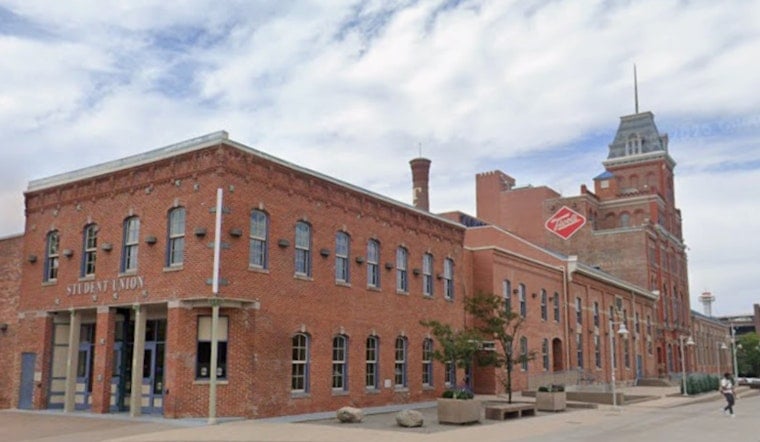
At Metropolitan State University of Denver, researchers are building artificial-intelligence tools to “read” Colorado’s rivers and predict how much water will be flowing weeks or even months ahead. The Colorado Water Conservation Board-funded project, led by assistant professor Mohammad Valipour, aims to deliver daily and monthly streamflow forecasts across seven major Colorado rivers. The team says those longer lead times could give communities, reservoir operators, and farmers more breathing room to prepare for droughts or floods.
How the model works
The project starts by cleaning seasonal climate records in a process the team calls “de-noising,” stripping out patterns and oddities that can throw off the algorithms. After that scrub, air temperature, precipitation, and historical discharge data are fed into a pair of neural networks: one tuned for short-range forecasts and another focused on longer horizons. Their outputs are then blended into an ensemble forecast.
As reported by Denver7, the system also pulls in satellite-based precipitation products and high-resolution snowpack surveys to cover stretches where ground sensors are sparse. Researchers then stack those model predictions against historical streamflow measurements to see which approach performs best.
Published methods and accuracy
Peer-reviewed results from the project detail hybrid model architectures, including a Wavelet LSTM and a Wavelet Convolutional Neural Network LSTM. The study reports that a WCNNLSTM configuration using NASA’s IMERG precipitation data often showed the strongest subseasonal-to-seasonal forecasting skill. The models were trained on decades of meteorological inputs and evaluated against U.S. Geological Survey discharge records to quantify accuracy.
As outlined by the Journal of Applied Water Engineering and Research, the work was supported by a grant from the Colorado Water Conservation Board.
Data challenges and trade-offs
Valipour stresses that raw climate records are full of seasonal cycles and odd anomalies that can trip up artificial intelligence, so careful data cleaning is non-negotiable for reliable forecasts. “So that’s why the first step is just to ‘de-noise’ the data,” he said in an interview with Denver7.
He also points out that running advanced AI models comes with an environmental cost of its own, including extra energy use and water demands for computing infrastructure. That trade-off, he says, is something the team is working to keep as small as possible.
Funding and next steps
The project began with state seed funding that allowed the team to assemble long historical records and secure the computing muscle needed for model development. The Colorado Water Center’s annual report lists the work among CWCB-backed seed grants meant to connect university research with real-world water-management needs across Colorado.
Researchers say that broader, multi-institution testing and full operational validation will require more time and additional funding before the forecasts can be trusted for high-stakes decisions on the ground.
Why Colorado managers care
Subseasonal forecasts matter in a state where spring snowmelt and sudden storm bursts can make or break reservoir operations and irrigation schedules. The U.S. Geological Survey has been developing and testing its own LSTM-style deep-learning models for regional drought prediction, finding that AI can complement traditional, physically based forecasting systems rather than replace them.
If MSU Denver’s models reach operational reliability, Valipour says forecasts could be turned into localized “drought alarms” to help communities and water managers act earlier, according to MSU Denver.
What comes next
The team is now testing performance across different river basins and time horizons while inviting collaborators to validate the system in real operational settings. Researchers emphasize that these AI tools are meant to sit alongside, not supplant, traditional hydrologic models, and that managers will need to weigh forecast skill against the cost of running such systems.
The peer-reviewed paper and ongoing field experiments provide the technical baseline for those next steps, and the authors say wider adoption will depend on independent validation and additional support to bring the forecasts into everyday water-management decisions.



