

























































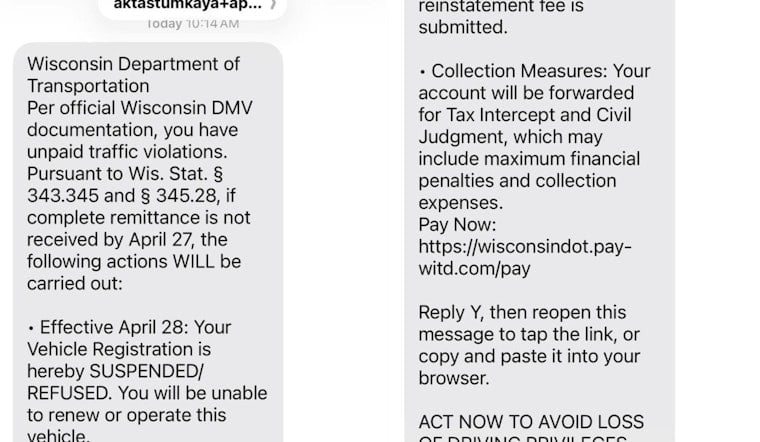
Oak Creek residents are being hit with a new round of scam texts that look like they are straight from the Wisconsin Department of Transportation and threaten to yank your driver's license if you do not pay up. Police said Monday that the messages use official-sounding language and a slick payment link meant to scare people into acting fast. Their advice is simple: delete the texts, do not click, do not reply and report anything suspicious to local officers.
State Warns Of DMV Phishing Texts
The phishing campaign first hit the state’s radar in mid-April, when the Wisconsin Department of Transportation warned that bogus texts often use subject lines like 'Driver’s License Suspension Pending' or list vague 'violation details.' The messages typically push recipients to tap a button that routes them to an unofficial payment site.
WisDOT stressed that these texts are not coming from the agency and that legitimate notices will arrive only through its official channels. The department urged drivers to rely on verified services, such as its eNotify system, if they want to track real alerts about their license or registration.
Oak Creek Post Shows Fake Payment Link
In its public alert, Oak Creek police shared a screenshot of one of the scam messages, including a phony payment URL that starts with 'wisconsindot.pay-witd.com/pay.' The department told anyone who received that text to call Oak Creek police at 414-762-8200 and to report any suspicious messages, according to the department’s Facebook post.
The same scam has been popping up across southeastern Wisconsin, not just in Oak Creek. Local coverage has documented near-identical texts in other communities, with WISN 12 noting that the messages often come from out-of-state numbers and lean heavily on scare tactics to create a false sense of urgency.
How The Texts Try To Trick You
Scammers behind these campaigns are betting that the threat of sudden penalties, such as license suspension, registration revocation or extra fines, will push people into paying before they stop to double-check what is going on. The wording and layout sometimes mimic official government sites and logos, according to a consumer alert from the Wisconsin Department of Agriculture, Trade and Consumer Protection.
DATCP and WisDOT say the texts may link to convincing but entirely fraudulent payment portals. Their shared advice is to ignore contact information inside the text and instead verify any notice by going directly to the agency’s official website or calling a known, trusted phone number.
Protect Yourself And Where To Report
Officials are clear on the ground rules: do not click on links in an unexpected text, do not reply and do not call any number listed in the message. Delete it, then check your account or license status through official channels, as WisDOT recommends.
If you want to flag the scam for investigators, you can submit a report to the Internet Crime Complaint Center at IC3 or contact your local police department and share the details there.
Why It Matters
Text-based cons are not just an Oak Creek headache, they are a national money drain. Consumers lost 470 million dollars to scams that started with a text message in 2024, and fake unpaid-ticket or toll notices are among the more common schemes, according to the Federal Trade Commission. When victims and near-victims report what they see, regulators and police can better track trends and warn others before they get hit.
If You Already Clicked Or Paid
If you did click the link or entered payment information, state officials say you should move quickly. Contact your bank or card issuer right away to try to stop or reverse any charges and consider placing a fraud alert on your credit reports, according to DATCP.
Oak Creek police asked anyone who has already sent money or who has information about these texts to call the department at 414-762-8200. For additional guidance at the state level, residents can reach DATCP’s Consumer Protection Hotline at 800-422-7128.





