

























































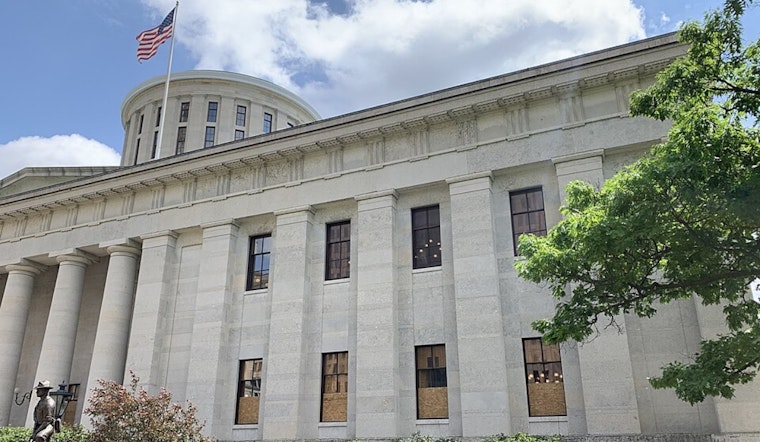
Ohio lawmakers are taking a swing at what they call “addictive” social media, rolling out a bipartisan bill that would force certain apps to flash a health-style warning every time an Ohio user opens them. House Bill 808, introduced April 1, homes in on algorithm-driven feeds and features like push notifications, autoplay, infinite scroll and like counts that lawmakers say are built to keep people glued to their screens. Supporters pitch the proposal as a consumer warning meant to tip off parents and users to potential mental health risks.
What the bill would do
Under HB808, any platform that meets the definition of an “addictive social media platform” would have to display a specific warning label each time a covered user accesses the service, not just bury it in fine print. Operators would be prohibited from tucking the notice into terms of service or using design tricks that make it easy to ignore. The bill authorizes the attorney general to seek civil penalties, restitution and injunctions against platforms that refuse to comply. According to the bill text on the state’s website, HB808 spells out how the warning must appear, how it would be enforced and how key terms are defined: Ohio Legislature.
Who’s behind the push
HB808 was introduced April 1 by Rep. Christine Cockley (D‑Columbus), joined by a bipartisan group of co-sponsors listed on public tracking pages. The full sponsor list appears on sites such as LegiScan. Cockley told reporters she drew on Nickelodeon’s Worldwide Day of Play and on warning-label efforts in other states when crafting the idea, according to Cleveland.com.
Label design, health research and reporting
The proposal tasks the state’s director of behavioral health, working with the departments of health and of education & workforce, with writing the warning text and updating it every year. That language must be grounded in available medical and sociological research. HB808 specifically tells experts to weigh studies on heavy social media use and behavioral health issues such as anxiety, depression, body dysmorphia, sleep disruption and potential fallout for attention, memory and educational outcomes. The director would also have to file an annual report that sums up the department’s work under the law and recommends any new legislation that might be needed, according to the bill text: Ohio Legislature.
Related AI bill would target chatbots
In a separate but related effort, Cockley and Rep. Ty Mathews have introduced House Bill 524. That proposal would let the attorney general investigate AI chatbots that encourage self-harm or harm to others and seek civil penalties against companies when their automated systems generate dangerous instructions or advice. Details on HB524’s enforcement tools and penalty structure are posted on the legislature’s bill page: Ohio Legislature.
Legal hurdles likely
Ohio is stepping into a legal fight that is already well underway in other states. Tech industry groups argue that mandatory state warnings on social media amount to unconstitutional compelled speech under the First Amendment, according to legal coverage. In Colorado, a federal judge temporarily paused that state’s social media warning-label requirement for minors after NetChoice sued, finding the group was likely to prevail on its constitutional claims, as reported by The Colorado Sun. That case, along with an ongoing debate over whether these notices are government speech or commercial regulation, is expected to shape how Ohio’s law is crafted and defended in court, legal analysts have noted: Bloomberg Law.
Next steps
For now, HB808 is at the starting line. It has been formally introduced but still needs committee hearings and floor votes before it can head to the governor’s desk. The bill would require the attorney general to maintain a public-facing website to collect complaints and referrals related to covered platforms and to publish an annual summary of findings and recommended changes, according to Cleveland.com. Lawmakers are watching New York closely, where a newly signed law already requires warning labels on social media platforms, as part of a growing national wave of state-level social media rules, according to Governor Kathy Hochul's office.



