

























































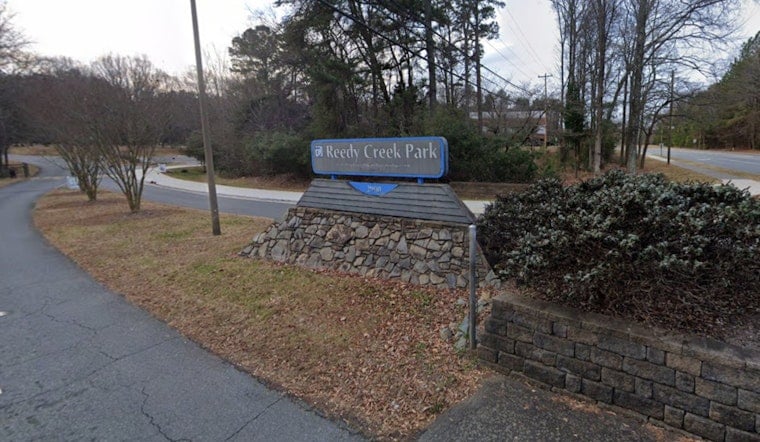
Charlotte has put a painful chapter of its past in writing at Reedy Creek Park & Nature Preserve, where a new historical marker now names the racial terror that claimed the life of 22-year-old tenant farmer Willie McDaniel in 1929.
The blue-and-gold plaque, unveiled April 18, 2026, quotes James Baldwin, declaring, “Nothing can be changed until it is faced.” Family members, community organizers and Mecklenburg County officials gathered at the site, with McDaniel’s descendants playing a central role in dedicating the marker that bears his name.
As reported by The Charlotte Post, the unveiling grew out of a partnership between the Charlotte-Mecklenburg Remembrance Project, the Equal Justice Initiative and Mecklenburg County. The plaque spells out what is known about McDaniel’s death and marks its approximate location, and The Post notes that descendants were invited to help reveal the marker to the public.
What Happened to Willie McDaniel
Contemporary news accounts and later research say that on June 30, 1929, McDaniel was found face-down in the woods near his rented cabin, his neck broken and his wrists bearing abrasions. The discovery came after an earlier confrontation with his white landlord, Mell Grier. An all-white grand jury reviewed the case, but no one was ever charged, according to the Charlotte-Mecklenburg Remembrance Project’s timeline on It Happened Here.
Why the Marker Matters
The Reedy Creek plaque is part of a much larger national push to call racial terror by its name and to mark where it happened. The Equal Justice Initiative has documented 4,084 racial-terror lynchings in 12 Southern states between 1877 and 1950, building a record that stretches far beyond any single county or case.
Local reporters and community leaders say that public markers, along with ceremonies that collect soil from lynching sites, work as tools for truth-telling and community healing, not just symbols, as reported by WFAE.
Reaction at the Dedication
“I feel joy because it recognizes what happened to our family and many other Black families in American history,” Tiffany McDaniel said in an interview with The Charlotte Post.
Justin Perry, who serves on the steering committee of the Charlotte-Mecklenburg Remembrance Project, described the marker as “a lasting witness to truth,” saying it is intended to nudge Charlotte toward a more honest conversation about the violence that shaped its past.
What Organizers Say Comes Next
Organizers say the Reedy Creek marker is only one step. Plans include a soil-collection ceremony and a separate marker linked to the 1913 killing of Joe McNeely at the site where Bank of America Stadium now stands. The project’s website and related reporting note that both the city and the county have agreed to install markers that acknowledge Mecklenburg County’s history of racial terror, according to It Happened Here.
The new marker at Reedy Creek may be modest in size, but its implications are not. Backed by the county and driven by community effort, it is a public admission that past racial violence belongs in open view rather than buried in silence. For many Charlotte families, that metal sign is less an endpoint than a starting line for long-delayed conversations about history, memory and justice.





