

























































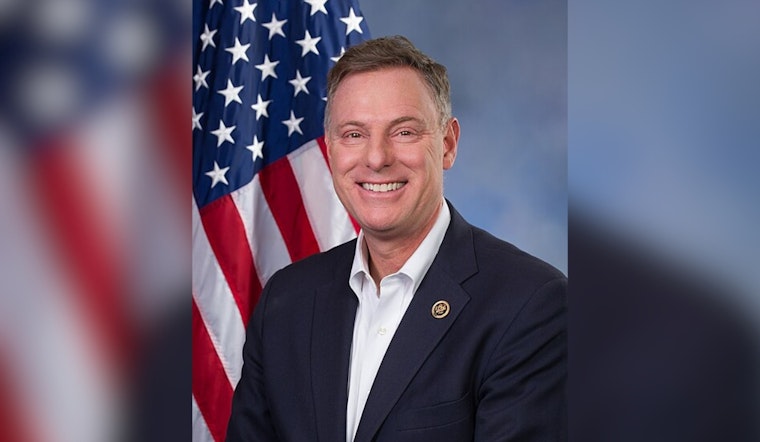
Rep. Scott Peters took his funding fight straight to the tarmac this week, rolling out new legislation at San Diego International Airport that aims to keep TSA screeners, Coast Guard crews and other Homeland Security workers paid and on the job while Congress battles over immigration money. His proposal, the Homeland Security Continuity and Accountability Act, would let the DHS secretary temporarily move unspent immigration-enforcement funds into other Homeland Security accounts during a funding lapse so essential operations and paychecks do not grind to a halt. Peters cast the plan as a practical way to keep public-safety work from becoming collateral damage in a broader border showdown, and local airport screeners and emergency staff in San Diego, many already working without regular pay, say the financial strain is not theoretical anymore.
What the bill would do
Peters, working with Rep. Steven Horsford, introduced a bill that would give the DHS secretary short-term authority to transfer unspent money from last year’s large immigration package, sometimes nicknamed the “One Big Beautiful Bill,” into accounts for TSA, FEMA, the U.S. Coast Guard and the Cybersecurity and Infrastructure Security Agency. Supporters argue this shuffle would keep core national-security and emergency-response work running while Congress hammers out limits on immigration enforcement. A brief summary of the bill lays out the mechanics and notes that AFGE has endorsed the approach, and Peters’ office says the whole point is to stop frontline workers from being treated as bargaining chips.
Why San Diego workers care
San Diego’s TSA operation is relatively small on paper, roughly 700 screeners at the airport, but the workload is heavy, and union leaders say the missed paychecks are hitting hard. Nyrine Washington, speaking for the local union, told a local station that about 80 percent of those workers had reached out for help with gas cards, groceries and short-term loans, with single parents feeling the crunch most acutely. Those stories from the checkpoint helped drive Peters’ decision to spotlight the bill right at the airport instead of from a distant committee room, as reported by CBS 8.
Temporary pay move from the White House
The White House has tried its own workaround. President Trump signed an executive action meant to get pay flowing again to TSA employees while the standoff drags on, and DHS officials said workers should start seeing paychecks soon. Peters and other lawmakers cautioned that an executive order is still a stopgap, since a future administration could change or scrap it, which is why he is pressing for a law that would serve as a sturdier backstop. For the executive-order detail, see AP News, and for Peters’ comments see CBS 8.
Political path ahead
While airport workers watch their bank accounts, the bigger money fight is unfolding on Capitol Hill. The Senate approved a bipartisan plan to reopen most of DHS while carving out ICE and parts of CBP, but House leaders have not advanced that version and instead moved toward a different short-term fix as lawmakers headed out for a brief recess. That disconnect, combined with competing demands inside the House, means Peters’ bill faces a tough climb even if it is popular back home, since shifting appropriated funds is a legally and politically touchy subject. For the latest on congressional votes and the departmentwide proposals, see CBS News.
Local reaction and next steps
In San Diego, union leaders and Peters’ office are pitching the measure as a narrow fix aimed at safeguarding essential missions and the workers who perform them, without reopening the spigot for additional ICE or CBP funding. The American Federation of Government Employees praised the proposal in Peters’ news release and called it a way to end the practice of ordering employees to work without pay. Peters told reporters he plans to keep pressing colleagues to sign on as cosponsors and suggested local officials should watch closely to see whether any new authority is used the way it is advertised.



