

























































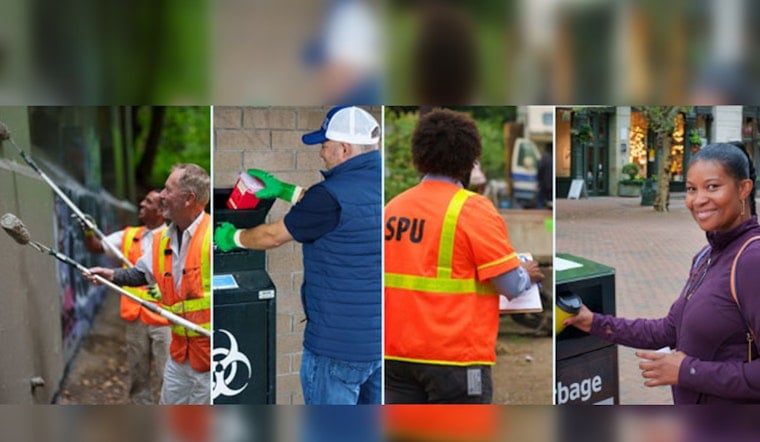
Seattle’s trash crews have been busy. Very busy. Seattle Public Utilities' Clean City teams and partner crews hauled nearly 2 million pounds of garbage tied to homeless encampments and RVs in 2025, part of a citywide push that saw 5.3 million pounds of debris cleared from streets, sidewalks and greenbelts over the year.
All that hauling is spelled out in the Seattle Clean City 2025 Community Impact Report from Seattle Public Utilities. The report tallies up some big numbers for 2025: 5.3 million pounds of debris removed from the public right‑of‑way, 661,105 sharps collected, roughly 31,938 volunteer hours logged and more than 34,700 service requests processed. Officials frame the effort as both everyday cleanup work and advance prep for major events the city expects next year.
The Seattle Times breakdown shows how that trash weight piled up: routine garbage service to certain encampments accounted for more than 716,000 pounds, RV‑focused cleanup work added about 1.1 million pounds, and targeted “deep cleans” in south and west Seattle removed more than 81,000 pounds. According to the same reporting, crews carried out roughly 1,190 geo‑cleans, and collections tied to encampments made up nearly 40 percent of all right‑of‑way pickups.
How crews operate
Per the report, Clean City field teams visited an average of 41 encampments on a regular schedule, then layered on coordinated geo‑cleans and other focused sweeps to pull out hazardous materials and bulky waste. The same document notes crews collected 661,105 needles over the year and that SPU is bracing for roughly 180,000 extra pounds of trash from stadium‑area visitors this summer, a surge officials say they are already planning around.
Why cleanup isn't a solution
Housing advocates and outreach workers are quick to stress that cleaner streets do not equal an answer to homelessness. They argue that while visible sanitation is crucial, it cannot substitute for housing and services. “Trash removal does not solve homelessness but provides people basic human dignity while keeping public spaces clean and safe,” Sage Wilson told The Seattle Times. The outlet also quoted SPU’s Curtis Bright, who said the Clean City team “deploys teams and crews daily, seven days a week.”
City leaders say the numbers highlight the sheer scale of what crews are facing and why tight coordination between outreach, sanitation and public‑health partners is crucial as Seattle gears up for big summer events. Funded as a roughly $20 million program in recent budget cycles, Clean City is likely to stay under the microscope as officials watch to see whether heavy‑duty cleanup work, paired with expanded outreach, can cut down on hazards while connecting more people to longer‑term help.




