

























































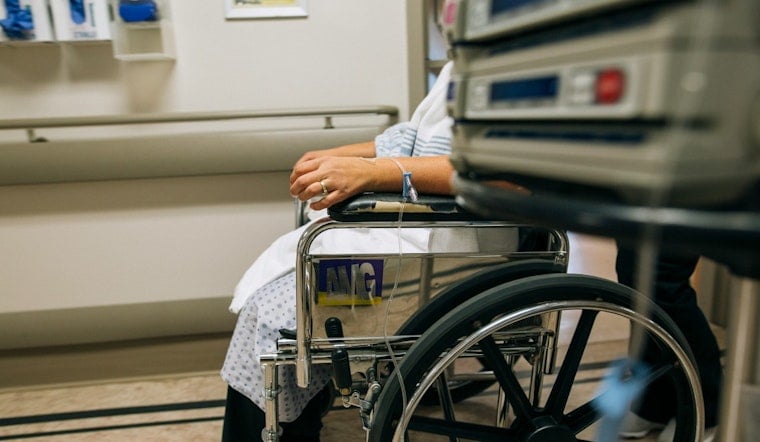
A new FDA-cleared device called the ARC-EX is giving some Austin residents with spinal cord injuries something they were told not to expect years after injury: stronger hands and more control over everyday tasks. At Spero Rehab, people who had little or no hand movement for years say an eight-week program that combines electrical stimulation with focused occupational therapy has led to noticeable changes. Therapists and patients report improved sensation, faster task times and small but meaningful boosts in independence, from holding a cup to buttoning a shirt.
Clinical trial shows meaningful gains
In a pivotal multicenter trial published in Nature Medicine, ARC-EX therapy helped 72% of participants meet pre-specified criteria for improvements in upper-limb strength and function, and 90% improved on at least one strength or function measure. The Up-LIFT study also reported significant gains in pinch and grasp force, better sensory scores and fewer muscle spasms for many participants.
Austin clinic sees similar results
Spero Rehab began offering ARC-EX in late 2025 and reports that some patients cut roughly 30 seconds off standard task-completion times after eight weeks of therapy, according to the clinic’s team and its announcement. Occupational therapist Claire King measures each patient’s hand strength and dexterity with the stimulator turned off at four and eight weeks, and local patients told the Austin American-Statesman they had noticed regained feeling and improved hand opening. Dane Stanley described his hands as once being “like bricks stuck in a closed position,” while Robin Young said the device “makes it possible to do things I wouldn't be able to do.”
How the therapy works
The system is non-invasive and uses surface electrodes placed above and below a cervical injury to deliver patterned electrical stimulation while patients perform task-specific exercises. The technique is intended to prime spinal circuits and strengthen spared pathways. Technical reporting in IEEE Spectrum and the clinical data describe stimulation delivered at about 30 Hz with a high-frequency carrier to improve comfort and effectiveness during repeated rehab sessions.
Approval and availability
Onward Medical began U.S. commercial placements after regulatory milestones, and the company announced initial U.S. sales in early 2025 as it rolled the system out to select clinics. The FDA’s 510(k) clearance letter dated November 14, 2025 confirms the ARC-EX indication to improve hand sensation and strength in adults with chronic incomplete cervical spinal cord injury, and subsequent filings expanded clinic and home-use options.
Benefits beyond grip
Beyond measurable improvements in grip and dexterity, the Up-LIFT trial and clinic reports cited reductions in spasm frequency, improved sleep and modest pain relief for many participants. A subset of patients also reported increased sensation in lower limbs or better bladder control. Those exploratory outcomes suggest ARC-EX may offer broader quality-of-life benefits in addition to better hand function.
Who’s eligible and how to pursue treatment
The device is indicated in the U.S. for adults 18–75 with chronic, non-progressive incomplete cervical injuries (C2–C8), and clinics screen patients to determine who is most likely to benefit. Prospective patients are advised to contact local rehab centers about candidacy, program length and pricing. Clinics offering ARC-EX can set up consultations to evaluate individual cases.
Clinicians caution that ARC-EX is not a cure, but for many it has shifted expectations about what is possible years after injury. Spero Rehab staff say offering the therapy “gives people hope,” and companies and research centers are already studying implantable versions and brain-computer interface pairings that could expand options in the years ahead.





