

























































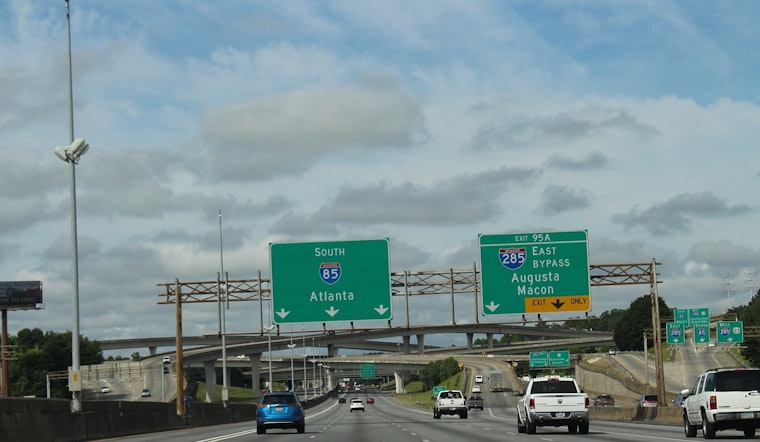
Every weekday, Atlanta drivers funnel into the tangle where I‑85 and I‑285 meet and know what is coming: brake lights, lane changes and a whole lot of waiting. The Tom Moreland Interchange, better known as “Spaghetti Junction,” was built to unclog one of the region’s nastiest knots. Instead, the layered ramps and routine backups have turned into a permanent migraine for commuters and truckers. A new explainer from The Atlanta Journal‑Constitution walks through how an engineering fix from the 1980s has been overtaken by growth, freight demands and hard limits on the design itself.
As reported by The Atlanta Journal‑Constitution, the five‑level stack, officially named the Tom Moreland Interchange, replaced a jammed cloverleaf in the 1980s and actually did ease backups for a while. Georgia Public Broadcasting traces how the “Spaghetti Junction” nickname stuck and notes that the interchange has taken on an outsized role in Atlanta pop culture.
Built to fix a problem, but not forever
The current interchange opened in 1987 after a multi‑year rebuild that the Georgia Department of Transportation describes as part of a broader push to modernize the region’s freeway geometry. According to Georgia DOT, the redesign eliminated the old cloverleaf choke points and was considered a technical success at the time. What it did not do was anticipate how big and how fast the region would grow. The stack’s tight weaving and multiple ramp merges now concentrate delay into a few short, brutal segments.
Growth, freight and the geometry of congestion
A December 2025 analysis of Google Maps traffic imagery found the worst bottlenecks on northbound I‑85 and eastbound I‑285 and linked persistent delay to route‑level weaving and crash‑related anomalies, especially during the afternoon rush. The study also cites GDOT’s 2024 average annual daily traffic figures showing that parts of the interchange carry more than 200,000 vehicles a day, paired with hundreds of crashes over a four‑month sample. Regional population growth stacks on top of that load: the Atlanta Regional Commission reports that the 11‑county region added roughly 64,400 residents between April 2024 and April 2025, which keeps more commuters and freight vehicles pouring through the same trouble spots.
Plans to add lanes, not a quick fix
GDOT’s main playbook for relief is the I‑285 Top End Express Lanes project, which would add two barrier‑separated managed lanes in each direction along the northern perimeter and let buses and registered vanpools use those lanes toll‑free. A GDOT fact sheet notes that more than 240,000 vehicles travel this corridor on a typical weekday and that the Final Environmental Impact Statement was issued in October 2025. Procurement and phased construction are expected to stretch into 2026 and beyond, so any noticeable relief will come slowly and in stages.
What it means for drivers
For drivers, the message is blunt: Spaghetti Junction’s problems are structural and regional, not just the result of a single badly placed ramp. As The Atlanta Journal‑Constitution shows, the fixes on the table are expensive, complicated and phased over years. That means the Tom Moreland Interchange is likely to remain a defining, if unpopular, part of Atlanta’s daily commute for the foreseeable future.





