

























































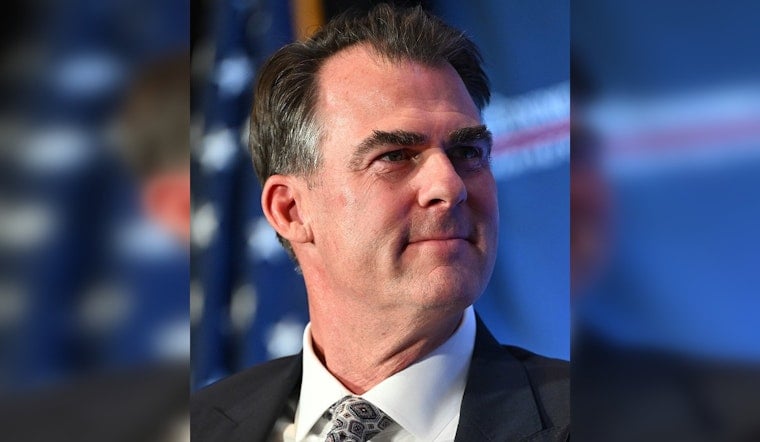
Gov. Kevin Stitt has vetoed a bill that would have kept the Oklahoma Advisory Council on Indian Education alive beyond 2026, leaving the 18-member advisory panel staring down its July 1, 2026 sunset date. The council advises state education leaders on tribal history, regalia and programs for Native students, and the move injects fresh uncertainty into school districts and tribal partners that have relied on the panel for guidance.
Bill, votes and timeline
House Bill 3006, written by Rep. Gerrid Kendrix and Sen. Micheal Bergstrom, would have pushed the council’s expiration out five years and kept it in place through 2031. The measure moved quickly through both chambers with bipartisan support and was enrolled before heading to the governor. The legislative record shows the House approved the bill 81-8 on March 12 and the Senate passed it 37-8 on April 15, according to the Oklahoma Legislature.
What the governor said
In a veto message, Stitt labeled the council "dormant" and "redundant," arguing that publicly available records indicate it has not operated with the level of transparency the public should expect. The governor's letter notes that the council "met only about six times in the past five years," a figure he cited as justification for rejecting the bill. The full veto message is posted by the Office of the Governor.
What the council does
The Oklahoma Advisory Council on Indian Education was created in 2010 to make recommendations to the State Board of Education and the state superintendent on matters affecting Native students. State statute sets the body at 18 seats and directs it to meet quarterly. The Oklahoma State Department of Education posts the council’s membership, agendas and materials and notes that more than 150,000 Native students attend Oklahoma public schools, roughly 15 percent of total enrollment, according to the Oklahoma State Department of Education.
Tribal leaders defend the council
Corey Bunch, the council chair and Cherokee Nation chief of staff, has argued that the panel has helped move conversations forward on issues such as mascots and students wearing tribal regalia, and that those discussions need a standing forum. Bunch told public radio earlier this year that councils like this "give a voice to our Native American students," a point reported by KOSU.
Bills lined up and the path forward
Lawmakers filed parallel measures this session intended to keep the council in place. One bill would remove its sunset entirely while another would extend the date and add appointment requirements. Public media reporting notes that House Bill 3320 would eliminate the sunset and Senate Bill 1721 would extend it with new membership rules, according to KGOU. Lawmakers have until the end of the legislative session to attempt an override. An override requires a two-thirds vote in both chambers.
Reaction and legal timeline
After the veto was released, Bunch called the move "disappointing," and legislative leaders said they had not yet decided whether to pursue an override, as reported by Oklahoma Voice. The council’s Oklahoma State Department of Education page still shows a June 17 meeting on the calendar, underscoring the uncertainty, and lawmakers note that the state's sunset rules create a short window for terminated boards to wrap up business. For how sunset legislation has been handled in recent sessions, see the Oklahoma Legislature.
Why it matters locally
Supporters say losing the council would remove a formal, state-level forum for tribal consultation on classroom materials and student supports in a state where Native students are a sizable share of enrollment. The dispute follows earlier fights over appointments and authority that prompted legislative changes in 2023, a history chronicled by local reporting and public radio, leaving the future of structured tribal-education collaboration in question.




_(cropped).jpg)