

























































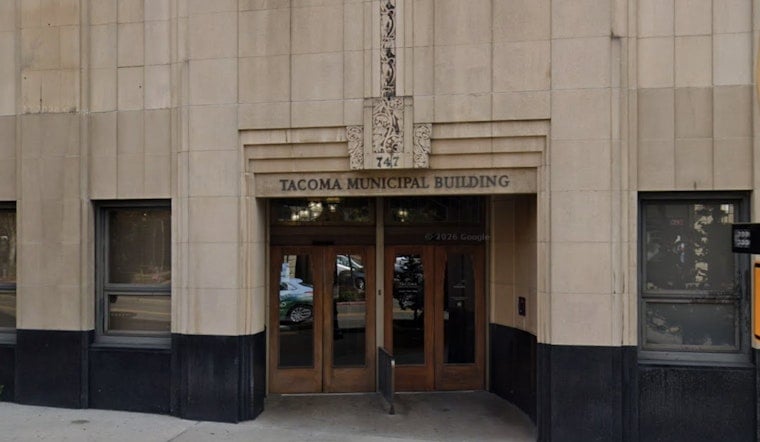
Tacoma’s experiment with using big rocks to block homeless encampments is officially under the microscope. The City Council has ordered a full review of the large boulders that have been dropped into planting strips and other rights-of-way to deter camps, setting up a long, methodical look at what some critics have dubbed “hostile” street design.
What the council ordered
In a unanimous April 14 vote, the council approved Resolution RES41891, sponsored by Councilmembers Jamika Scott, Kristina Walker and Olgy Diaz. The measure affirms that “site reclamation” should be used to activate and restore public spaces, not just close them off, and directs City Manager Hyun Kim to evaluate how boulders have been used so far.
According to the City of Tacoma, Kim must compile an inventory of boulder sites and prepare cost estimates for removal, storage and site restoration. Staff have been told to prioritize trees and landscaping and to treat boulders as a last resort. The manager has until July 2026 to report back, and any removal costs would have to be folded into the 2027-2028 biennial budget.
How much the city has spent
City spokesperson Maria Lee told The News Tribune that Tacoma has already spent $253,000 to buy and install 1,431 boulders at 24 locations. The rocks came from Washington Rock Quarries Inc., and contractor Acum Inc. handled installation.
The resolution notes that boulders are supposed to be used only when other options like lighting, fencing or new planting are not feasible. Supporters on the council framed the review as a chance to rethink those closed-off corners of the city and see whether they can be “activated” for better public use instead of just being blocked. The money question looms large: city officials have warned of an expected $15 million gap in the 2027-28 general-fund budget, which will heavily influence whether removal or storage can be funded.
Reaction outside City Hall has been sharply divided. Rob Huff of the Tacoma-Pierce County Coalition to End Homelessness told The News Tribune that the resolution is a step in the right direction, but he blasted the earlier spending on what he simply called “rocks,” arguing it was “counterproductive” and that the money could have gone to shelter beds or sanctioned safe sites.
On the other side, Kristen Wynne, chair of the Tacoma Business Council, argued the review itself is the misuse of resources. She said the process pulls scarce staff time away from more pressing work and called it “not a good use of the city’s resources,” according to the same reporting.
Backstory: the 'hostile architecture' debate
Tacoma’s rock strategy is part of a much bigger fight over so-called installation of hostile architecture, a term used for design choices that discourage certain kinds of public use. Local coverage and advocacy groups have repeatedly questioned whether the money poured into boulders would be better spent on shelter, services or community-friendly improvements that help both nearby residents and people living outside.
That ongoing backlash helped push council members toward seeking less permanent, more community-centered approaches. The new review signals that the city is at least willing to reconsider how it uses those rocky deterrents, even if it is not ready to yank them all out overnight.
What’s next
With the council’s marching orders in place, City Manager Hyun Kim will now inventory all existing boulder sites, identify locations where the rocks could potentially be removed and calculate costs for removal, storage and alternative treatments. Those numbers will be weighed against other budget priorities across the city.
The resolution requires property-owner agreement before any boulders are removed in residential areas. It also keeps in place rocks that were installed for clear safety reasons, such as protecting critical infrastructure or blocking access to hazardous spots. Council members emphasized that this is a review, not a blanket removal order, and that any changes will roll out slowly and only if the budget allows, according to the City of Tacoma file.





