

























































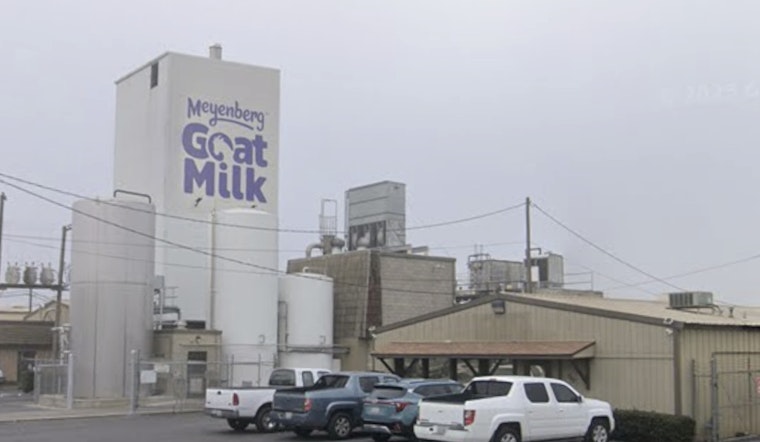
Animal-rights protesters brought their fight straight to a Turlock goat-milk plant over the weekend, accusing one of Meyenberg’s suppliers of mistreating animals and dumping carcasses in grim piles on a Stratford farm.
Dozens of activists rallied outside Meyenberg’s processing facility on Saturday, then took their protest to a nearby Raley’s, where they staged a die-in among the grocery aisles. Organizers said the demonstrations were sparked by felony charges filed against four people who removed two sick baby goats from the supplier’s property last year.
The action drew roughly a dozen protesters to both the industrial complex and the supermarket, where they chanted and held up photos of dead animals, according to organizers. As reported by The Modesto Bee, two of the defendants addressed the crowd outside the Meyenberg plant, and organizers said they were targeting retailers that stock the brand’s goat milk.
Direct Action Everywhere, the animal-rights network that has been documenting conditions at the supplier identified as Vera Goat Dairy, says drone video and other footage show piles of carcasses and animals kept in poor conditions. The group also says the two rescued kids were later treated for pneumonia and conjunctivitis. As detailed by Direct Action Everywhere, organizers framed the weekend protests as a response to what they call the “criminalization of whistleblowers” and urged shoppers and retailers to demand accountability from the company.
Charges and arrests
Kings County prosecutors have filed felony counts against Carla Cabral, Sally Zito, Tajnder Uppal and Joseph Allman, accusing them of grand theft of livestock, conspiracy to commit a crime and trespassing. Each defendant faces up to six and a half years in prison if convicted, according to reporting by the San Joaquin Valley Sun. The case stems from an open rescue last May, when the activists removed two emaciated baby goats from the Stratford operation.
Afterward, investigators with the Kings County Sheriff’s Office and the district attorney’s office reviewed complaints about the farm. In a letter obtained by protesters, officials said they found no evidence that animals were being deliberately mistreated or that carcasses were being disposed of in an open pit. The sheriff’s investigator did note carcasses covered under piles of manure but said that practice “aligns with evolving state guidance,” the The Modesto Bee reported.
Regulatory background
State water records show the Stratford site, listed in older notices as Milk Flow Dairy, was cited in 2021 after inspectors documented goat remains being composted on the property. That citation appears in the Central Valley Regional Water Quality Control Board CIWQS database.
Last year, state lawmakers approved AB 411, a bill that created narrow conditions under which ranchers may compost livestock carcasses on their own land. The bill text is available from the California Legislature.
What Meyenberg says
As reported by Yahoo, Meyenberg, which processes milk from dozens of farms including the Stratford supplier, says it buys only from farms that meet Certified Humane standards. The company said follow-up on-site visits at the supplier’s farm turned up no evidence supporting the activists’ allegations and that the Stratford operation was re-certified in October 2025.
Local reaction and next steps
Organizers say supporters have flooded prosecutors with messages urging formal cruelty investigations. Direct Action Everywhere said thousands of emails have been sent asking the district attorney to prioritize animal-abuse probes instead of criminal charges against rescuers.
Protesters left the Raley’s without incident after a store alarm went off, and organizers say more actions are planned while the criminal case moves ahead.
The four defendants are expected to appear in Kings County Superior Court in the coming weeks, as local community groups and national animal-welfare organizations continue to clash over enforcement, farm practices and whistleblowing. Whatever the courts decide, the controversy has pushed questions about supply-chain oversight and certification programs into the spotlight across California.




