

























































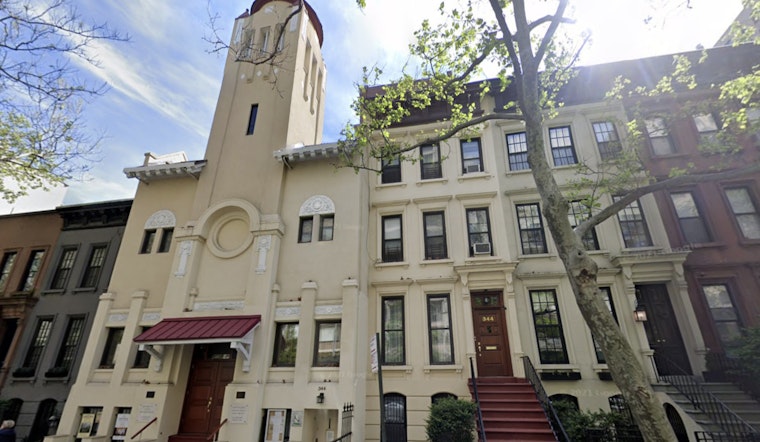
On a short stretch of East 7th Street, the front steps of the long-abandoned First Hungarian Reformed Church have, neighbors say, turned into a "human biohazard." Residents describe a man sleeping on the entrance stoops, an overpowering odor that hits halfway down the block, and a mess of urine, vomit and discarded needles. Several families say they are now steering clear of that part of East 7th Street near Tompkins Square Park, worried both about sanitation and the safety of children and park visitors.
Residents told the New York Post they have logged more than a dozen 311 complaints in the last week related to homeless-person assistance or encampments, and that at least two 911 calls were placed about the man. One neighbor, Raf Astor, said the stench "made him gag from the middle of the block," according to the outlet. Witnesses told the paper the man wandered between the church stoops and Tompkins Square Park on April 22. An FDNY spokesperson told the Post that an ambulance responded but the man refused medical care, while the Department of Homeless Services said it was closely monitoring the location and conducting outreach.
Historic Building and Landmark Status
The stoops in question belong to the former First Hungarian Reformed Church at 121 East 7th Street, a landmarked structure formally recognized for its architectural and cultural significance. According to the Landmarks Preservation Commission, the building has deep ties to the neighborhood’s Hungarian American community and features notable architectural details. That official status has complicated how the building and its public frontage are managed, as the owners and the city weigh reuse of the property alongside public-safety concerns on the block.
City Response and Outreach
City officials told the New York Post that outreach workers accompanied by clinicians will keep canvassing the area in an effort to connect vulnerable New Yorkers with shelter and services. Neighbors say sanitation crews have come through, but that trash and human waste are still visible on the steps, highlighting the gap between one-time cleanups and any kind of lasting fix. The FDNY account that the man refused transport underscores how limited the city’s options can be when someone on the street does not accept help.
Tompkins Square’s Long-Running Problem
Tompkins Square Park and the surrounding blocks have been a flashpoint for encampments and periodic sweeps for years, with a familiar cycle of outreach, policing and resident frustration that rarely seems to stick. Gothamist has chronicled earlier park sweeps and shifting enforcement tactics, showing how public pressure and policy shifts shape the city’s response to street homelessness in the area. For neighbors living near the landmark church, the current standoff feels like another round of that same pattern, with a heavier emphasis on public health.
For now, locals say they will keep calling 311 and pushing elected officials for a sustained cleanup and better shelter options, while city teams continue to come by with outreach resources. Until something more permanent changes, the church stoops remain a tense crossroads where preservation rules, public-health concerns and homelessness policy collide in the East Village.





