

























































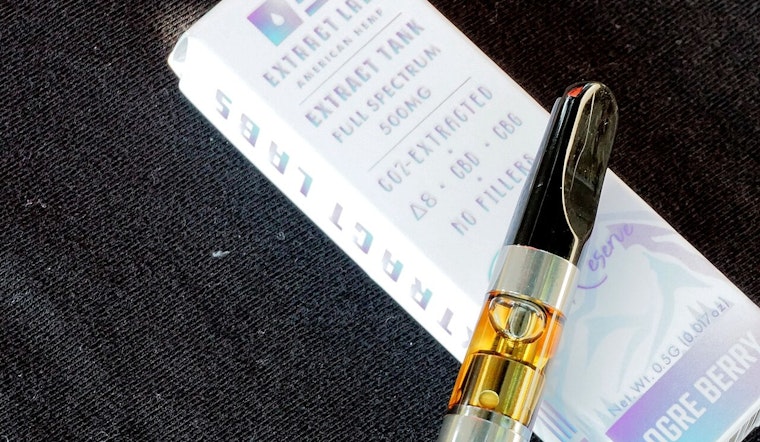
Harris County District Attorney Sean Teare has quietly hit pause on most low-level THC vape cases, telling local law enforcement this week that his office will not accept charges against people found with vape pens believed to contain THC unless forensic testing can prove the oil exceeds legal limits. The new guidance, sent to agencies earlier this week, points to limits in current lab methods and worries about storing lithium battery devices as evidence. For now, that leaves many everyday possession cases in a legal gray zone while prosecutors and crime labs wait for clearer testing rules.
As reported by KPRC Click2Houston, Teare's office says it will not accept charges for individuals possessing vape pens believed to contain THC because local crime labs can detect THC but cannot reliably determine whether that THC came from marijuana, hemp, or was produced synthetically. The guidance also notes that labs lack a precise way to measure delta-9-THC concentrations that fall between the legal hemp threshold and what many labs can confidently call illegal. Cartridges recovered from retail stores that market products as THC, however, are still supposed to be referred to prosecutors.
Why labs cannot give prosecutors a clean answer
The core snag is a technical gap between how Texas law defines hemp and what forensic testing can actually show. State law defines hemp as cannabis with a delta-9-THC concentration of not more than 0.3 percent on a dry weight basis, according to Texas House Bill 1325. Local forensic authorities have developed methods that can distinguish plant material above about 1 percent delta-9, but testing liquids and oils inside vape cartridges remains analytically tricky, as detailed by the Houston Chronicle. Until that gap closes, drawing a clear legal line from a tiny vial of oil is easier said than done.
What the DA's letter tells police brass
In his letter to police chiefs and sheriffs, Teare wrote that "recent changes in state law, combined with a rapidly evolving cannabis industry, have understandably led to confusion among officers" about which THC-related charges the Harris County District Attorney's Office will accept, according to KPRC Click2Houston. His office told the station it hopes future legislation will carve out clearer rules, and said it plans to keep prosecutors focused on violent and organized crime cases rather than pursuing prosecutions that rest on uncertain lab science.
State rule changes and hemp industry blowback
Teare's guidance lands just as state agencies have tightened testing and labeling rules for consumable hemp products and adopted new "total THC" calculations, a shift outlined in the Texas Register. The Texas Hemp Business Council and allied industry groups have sued to block those agency rules, arguing the changes go beyond what state law allows, according to the Texas Hemp Business Council. With courts, regulators, and labs all wrestling over definitions and testing methods, prosecutors say cases tied to cartridges will be handled with extra caution.
What this means on the streets of Houston
For everyday Houstonians, the practical effect is that many routine possession encounters involving a single vape pen are unlikely to result in a charge in Harris County unless there is clear evidence the product is illegal or it was seized from a retailer openly selling items marketed as THC. Officers are being told to keep following department rules on securing evidence, but the DA's office has warned that stockpiling large numbers of cartridges can create headaches and safety risks in property rooms because of lithium batteries. Defense attorneys say the policy highlights a simple reality: the law and the lab work have not fully caught up with modern cannabis products, and until they do, some of these cases are going to stay on the sidelines.





