

























































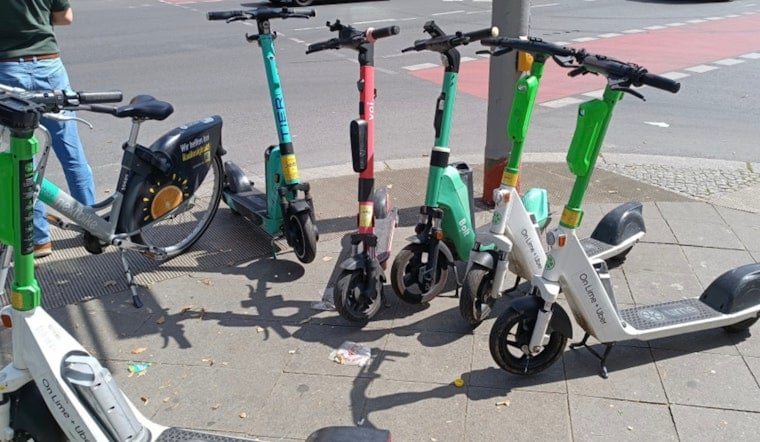
Lime is pressing Mayor Mamdani’s administration to sign off on a citywide expansion of its e-scooter share program, arguing the scooters are already quietly plugging stubborn transit gaps in the outer boroughs. The company is leaning on a new NYU-commissioned study that says the devices are handling a big slice of “last‑mile” trips that subways and buses do not reach.
NYU report: scooters fill transit gaps
A Rudin Center study commissioned by Lime found that ridership in the Queens pilot nearly doubled to about 648,000 rides from 2024 to 2025, with many of those trips starting or ending at transit hubs. As reported by Streetsblog, the researchers recommended letting riders pick up scooters closer to subway stations and express bus stops and called for more protected lanes that connect those hubs to nearby neighborhoods.
Lime's pitch to City Hall
Lime officials say they want a sit-down with Mayor Mamdani’s team to push for a broader rollout and to argue that New York’s micromobility market should be shaped by competition, not by keeping rivals out. "The scooters could be a \"complement\" to both mass transit and Citi Bike," Josh Meltzer, Lime’s head of government relations for the Americas, told Gothamist, adding that the company relies on designated parking corrals and geofences to cut down on scooters blocking sidewalks.
Price and competition
Recent price hikes have put the cost comparison front and center for riders weighing e-scooters against docked e-bikes. A non-member 30-minute Citi Bike e-bike trip now runs about $17.29, a $4.99 unlock fee plus $0.41 per minute, according to ABC7. Lime’s New York list rates, typically a $1 unlock and about $0.45–$0.50 per minute, come out to roughly $16 for the same 30-minute ride, per Lime. Both companies also dangle subscription plans and membership discounts that can significantly lower per-ride costs for frequent users, as the city’s Independent Budget Office notes.
Pilot footprint and who decides
The shared e-scooter program first rolled out in the East Bronx in 2021, then expanded into eastern Queens in 2024, under a Department of Transportation pilot operated by Bird, Lime and Veo. A 2020 state law that updated micromobility rules lets local agencies regulate e-bikes and e-scooters, which means DOT, not private companies, decides where shared devices can legally operate, according to NYC DOT and guidance from the New York DMV.
Safety and street design remain central
The Rudin Center study urged city officials to tie any expansion to more protected bike lanes and to station-area design changes meant to keep riders off sidewalks and lower the risk of conflicts with pedestrians, recommendations detailed in coverage by Streetsblog. DOT spokeswoman Mona Bruno told Streetsblog the agency "looks forward to continuing our scooter sharing programs with these communities" as it evaluates what comes next.
What it could mean for Citi Bike
Citi Bike’s rising fares and the terms of its Lyft-run contract have turned into both a political headache and a budget story. The city’s Independent Budget Office has highlighted that e-bike surcharges now make up a large share of Citi Bike revenue and noted that the current contract runs through May 2029. That timeline gives the city a window to revisit how it buys service, how it sets prices and whether to open the market to more operators as it plans the next version of bike share, according to the IBO.
Next steps
Lime says it will keep pushing for a meeting with the Mamdani administration and for coordinated work on lanes, parking corrals and fare integration that could make a wider rollout pencil out, according to Gothamist. For riders in the outer boroughs, the looming debate is likely to be as much about street design and price tags as it is about which company gets to sell the next half-hour ride.





