

























































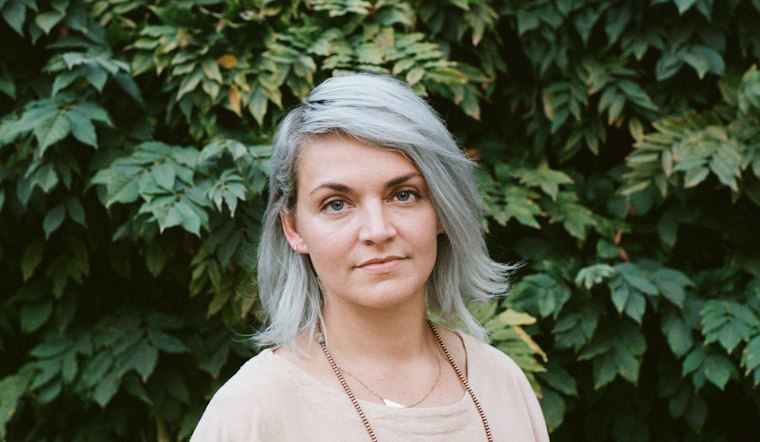
Photo via Joshua Howe
Today, producing media that incites conversation and change is more accessible than ever. “I Am Thalente” is a good example, as this documentary follows a homeless skateboarder from South Africa who, with support, is trying to accomplish his dreams of becoming a professional skateboarder in the United States. We caught up with director Natalie Johns to speak about “I Am Thalente” and her experiences with producing independent, social activist media.
“I am Thalente” won an audience award at the LA film festival - what do you think resonated with the audience so much that you received the accolade after?
When we would do the Q&A at the end of the film, people would say, “it really made me think about my own life, choices and situation, and how I could overcome certain limiting beliefs about my situation,” and it really brings into question, a reflectiveness into people’s own lives. That seems to be the resounding thing that came across from people. And it’s Thalente- I think whether or not you like the film, you can see where he’s come from, how hard he’s working to change his life and turn his life around. How could you not resonate with it, root for him and want him to succeed? If he can do it, I can do it.
Your film is centered around skate culture and the skate community. In the film, Kenny Anderson said that skateboarding provided a lot of focus and hope for him and other people. How do you think those values can transcend to wider culture?
I had no interactions with the skateboard community before I started the project but I had worked a lot with independent music. I am an art history scholar so when I dived into the story, I understood that the culture embodied the same values and principles I knew from working with independent music, that I knew from the creative arts industry. There has to be authenticity and integrity, and that quality transcends across everything in life. That’s a foundational value in the arts, and I consider skateboarding to be an art form.
That integrity, sense of freedom and commitment to an art form- Thalente embodies that. It’s like Tony Hawk said; it gives a sense of discipline, of focus. If you do what you love and you love what you do, nobody has to tell you to do it. It’s in your blood, so you naturally have a sense of discipline which carries through to every aspect of your life.
The dichotomy between Thalente and Sizwe in the film was very interesting. Thalente says so himself - “He needs something like I had.” How do you think upcoming media producers can create social change to give opportunities to more people, like the ones that Thalente had?
Our role as agents for social change as filmmakers is first and foremost, to amplify the voices of those most affected. Giving Thalente a platform for his voice in helping disadvantaged youths, that’s an important stepping stone. Sizwe is going to respond to someone like Thalente, who understands his experience deeply, more than he’s going to respond to me.
I’m working with a few other youths on other projects and I’m doing my best to try to understand where they’re coming from. But there are advocates in the field working with disadvantaged youth who understand them on a level that’s a bit deeper. So I see our role as filmmakers to be loudspeakers- giving people a voice and a platform.
If it’s a cause that’s deeply personal to you, to have an active voice in that and bring your understanding to a larger audience, it can open people’s minds. Community is another lynch pin in the skateboarding culture. Skateboarding doesn’t exist without its community - it’s a version of family for them.
A lot of media producers struggle with getting started, but once you do find that person it’s like a domino effect, then you build a whole community around the story or the person that you want to tell a story about. What was your motivation in building a community to help tell Thalente’s Story?
There’s a couple ways to approach it [a story]; you can be exploitative or supportive. I think my motivation was always super clear for me. I was prepared to fail if it needed to fail. My motivation was number one to help “Thalente.”
I was asked to do something with him because I was asked to help him find a way off the streets. No matter what happened, no matter if the project failed, my north star, my guiding compass was, ‘Is he okay? Is this moving him forward in his life?’ Even if it was a little bit of a challenging situation that I had to cover that would make him feel a bit uncomfortable at the time, was it ultimately going to be a benefit to him in the end? Because I was doing this so independently, I was always able to say, if you don't want to do this anymore we don't have to do it.
Independent media producers and big business studios speak two different languages. Do you foresee in the future that there will be more avenues for them to cross over?
Okay here’s the thing, no I don’t. Business is business you know. People are accountable, it’s dollars, it’s cents, it’s the bottom line. But what I would say is that sometimes you just need to do a completely independent project and over time, then people know how well you can tell a story.
How can you make something compelling and beautiful that’s really just, life. It’s real life - our daily life. The subtleties, the beauty, of daily life and personal experience. You gain credibility when you can do that well and people can trust in your ideas. I understood at some point when I was asking for a lot of money from a big brand where they were like ‘what if he changes his mind?’ Somebody’s job is on the line if they commit their money and I can’t follow through. I think that’s totally reasonable they couldn't commit to a large sum of money without a guarantee.
I was working today with someone who had worked on some of Michael Moore's films. She was saying how big some of the budgets are for his documentaries and I was like “what?!” I was so shocked.
She worked on Bowling for Columbine too and was like “look, it wasn't always like that.” It took time for him to be able to ask for that sort of money where people could trust him as a filmmaker and know he delivers. He’s honed his craft. He knows how to tell a story. He’s got a style, he’s got an eye. He’s got a perspective and a viewpoint that people resonate with. Then the two worlds [independent and commercial] can come in because there is a level of trust built that comes with the success of previous projects.
Do you have any tips or stories for budding media producers about making a living off of producing empowering and honest, activist-centered media?
The beauty of this life now, and the way the world is now, you just shoot everything. You have Premiere Pro, you can get a subscription to. You can learn it off of lynda.com. You can do it. And the more you do it the better you'll get. Bring creative people around you. Find people who are smarter than you. Find people you can work under and mentor with so you can learn from people who have that experience, and so you can network.
Networking is forming communities. You don’t just have to do it with your fellow students. You can go in and get on Michael Moore's team, you know, somehow, as the guy doing transcripts! Read all of those interviews, look at how he asks a question. Look at the people he has around him. You just start with what’s necessary.
I put that quote in the film because I live by that Nelson Mandela quote- “Start with what's necessary, then with what's possible, and soon you’re doing what you thought was impossible.” There is nothing that’s impossible now. There is no story that needs to be told that can’t be told.
Interview conducted by Josephine Tse and Joshua Howe



