

























































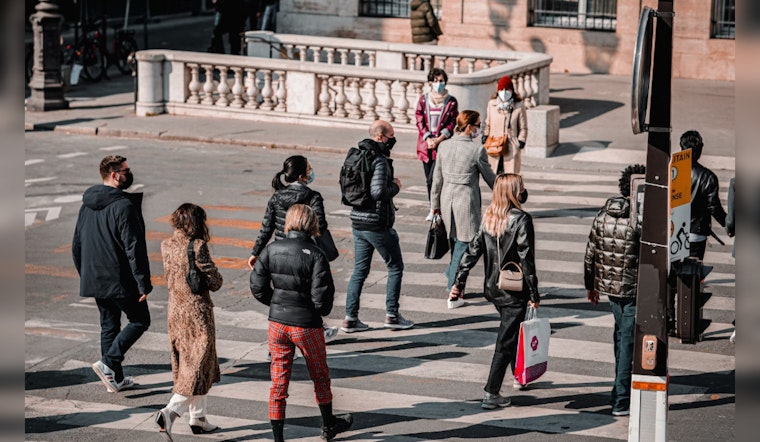
In a significant push to upgrade pedestrian safety, Houston has bagged a hefty $10.1 million federal grant to bolster the walkability and safe passage across several of its notoriously dangerous roadways. The cash infusion is targeted at adding extra layers of protection for those on foot along parts of Bissonnet Street, Airline Drive, Jensen Drive, and Tidwell Road, where collision rates have spiked concerns within the community.
These areas witnessed 1,025 crashes from 2017 to 2021, causing the death or severe injury of 13 pedestrians and the severe injury of two cyclists. Advocacy for these upgrades comes in light of these streets housing a largely color-dominant population, with many locals lacking personal transport, as Axios reported.
The project, as announced on Wednesday, entails constructing wider sidewalks, refuge islands for pedestrians, multiuse paths, and improvements to bus stops and street lighting. Spearheaded by the Greater Northside and International Districts, the Safe Streets Project is poised to reshape nearly 6 miles of urban thoroughfare. It encompasses Airline Drive from 28th Street to North Main Street and several key intersections: Bissonnet Street from Eldridge Parkway to Dairy Ashford Road, Jensen Drive at Aldine Westfield Road and near Tidwell Road, and Tidwell Road from Nordling Street to Irvington Boulevard—details obtained by Axios.
Aligning with the safer streets initiative, the U.S. Department of Transportation's grant carries out the City of Houston and Harris County's Vision Zero mission, an ambitious plan to eliminate traffic fatalities by 2030. This latest financial boost is part of a concentric effort to make Houston's roads less hazardous. Earlier this year, a separate $28.8 million was allocated to revamp a perilous 7-mile section of Bissonnet Street, according to The Houston Chronicle.
Furthermore, the Greater Southeast Management District was also awarded $320,000 to carry out a safety analysis integral to the city's action plan. These funds are designed to not just end the immediate dangers but to improve communal well-being, ensuring residents can move securely within their own neighborhoods.





