

























































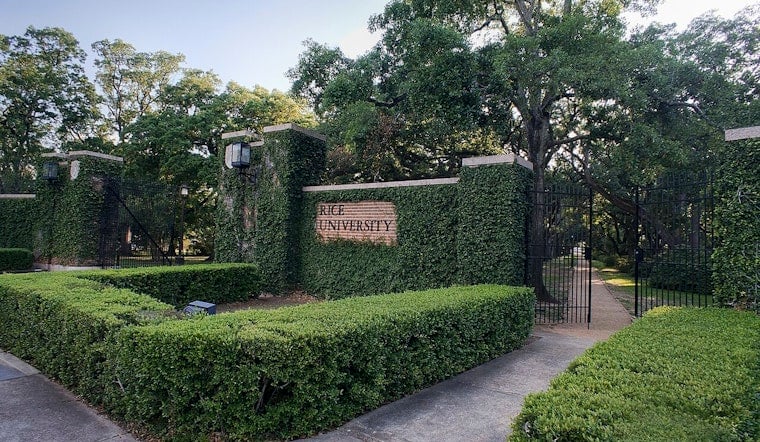
Rice University's Kinder Institute for Urban Research just landed a $55 million grant from the Kinder Foundation, a cash infusion that locks in the institute's long-term work on housing, education and economic mobility across Houston. Director Ruth López Turley is framing the donation as both a shield for the institute’s independence and fuel for its push to turn neighborhood-level data into policy, programs and, ideally, real-world change. The gift comes as the institute is tightening its ties with city agencies, school districts and community groups across the region.
According to Rice University, the Kinder Foundation's $55 million commitment breaks down into $50 million restricted for the institute’s endowment and $5 million for immediate research and program needs aimed at benefiting Houston. Rice's announcement notes that the funding will “preserve our research as a public good” and provide long-term financial stability so the Kinder Institute can take on projects for partners who otherwise could not afford to pay for research. That blend of permanent endowment support and ready-to-spend dollars is designed to keep neighborhood data and policy analysis on tap when local officials need answers in a hurry.
How the foundation frames the gift
As outlined by the Kinder Foundation, the grant will underwrite research, policy engagement and public-facing data platforms such as the Greater Houston Community Panel. The foundation casts the contribution as the latest chapter in a long-running partnership that now pushes its cumulative giving to the institute past $135 million.
Why this matters for Houston
Local reporting shows the Kinder Institute’s work has not stayed confined to charts and white papers. Its research has fed into decisions on pensions, school programming and neighborhood investments around the city. As reported by the Houston Chronicle, that practical track record, from Houston ISD analyses to survey tools that capture residents’ day-to-day experiences, is what funders and city officials point to when they line up behind the institute. The new endowment is meant to make that kind of civic research possible beyond the usual short grant cycles.
Turley told The Business Journals
Weeks after the institute's March 5 announcement, Turley spoke with The Business Journals about turning neighborhood-level data into on-the-ground programs and deepening partnerships that can pilot and scale local solutions. She described the Kinder Institute as a research-practice partner that does not stop at issuing reports, but sticks around to help public agencies implement and evaluate policy changes.
Research independence and rapid response
Rice leaders say the endowment portion of the gift will buffer the Kinder Institute from the ups and downs of grant funding, giving the team room to accept time-sensitive projects and to launch quick studies after storms or other emergencies. According to Rice University, that rapid-response capacity is a key selling point for donors who want academic research to work as a public good.
Part of a larger pattern of local gifts
The Kinder Foundation’s giving has been steady and highly targeted. As the foundation notes, it provided a $50 million endowment gift to the institute in 2022 and has backed both the institute and its building with multimillion-dollar contributions over the last two decades. The foundation's broader Houston strategy, which includes a $150 million pledge to help launch a Kinder Children’s Cancer Center with UT MD Anderson and Texas Children’s Hospital, highlights a pattern of long-term, place-based philanthropy that pairs research with services. EurekAlert has tracked those moves alongside local coverage.
For Turley and the institute’s partners, the new grant is both a guarantee of continuity and a push to produce even more practical, locally grounded research. City officials, funders and neighborhood groups will be watching to see how the Kinder Institute turns this endowment into measurable gains in housing, education and health across Houston.





