

























































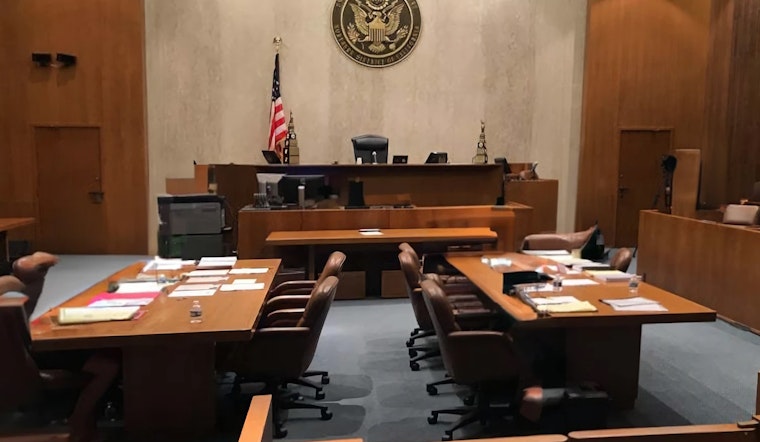
In a high-stakes showdown with the law, a California-based clothing wholesaler has been hit with a whopping $10.4 million fine for getting tangled up with drug trafficking sanctions and engaging in customs fraud. Ghacham Inc., trading under the Platini brand, was ordered to fork over $4 million, pay $6,390,781 in restitution, and will be under the watchful eye of probation for five years, following a ruling by United States District Judge Maame Ewusi-Mensah Frimpong in Los Angeles.
The company, caught red-handed, pleaded guilty last December to submitting bogus paperwork to dodge millions in customs duties and for striking illicit deals with a figure linked to the feared Sinaloa drug cartel. According to the Justice Department, at the helm of this deceit was Mohamed Ghacham, a 39-year-old corporate executive from Bell who also copped a plea on conspiracy charges. His sentencing looms on the horizon.
Documents presented in court pulled back the curtain on Ghacham Inc.'s shady operations, revealing that from July 2011 through February 2021, the company shaved off more than $32 million from the true value of the imported garments. This sleight of hand let them off the hook for about $6,390,792 in customs duties that rightly belonged to the government's coffers.
Judge Frimpong wasn't just content with financial penalties; she laid down the law, demanding the creation and upkeep of an anti-money laundering compliance and ethics program at Ghacham Inc. They'll also have to undergo an annual third-party monitor review, keeping the courts in the loop on their activities. The bust is historic—it marks the first criminal conviction in this district under the Kingpin Act, which lays down the law against mingling with "Specially Designated Narcotics Traffickers."
Prosecutors didn't mince words, branding the company's actions as a direct snub to the Kingpin Act. They were quoted saying, "It cheated taxpayers out of millions, both to save itself money and to secure an unfair edge against its competition in the Southern California garment market." The crackdown was a team effort, with Homeland Security Investigations and CBP leading the charge and significant backup from the U.S. Department of Commerce Office of Export Enforcement, the Treasury Department's Office of Foreign Assets Control, and the IRS Criminal Investigation.
The case is part of the larger war waged by the Organized Crime Drug Enforcement Task Forces (OCDETF), a program that pools the muscle of multiple agencies to take down high-level criminal organizations threatening the U.S.




