

























































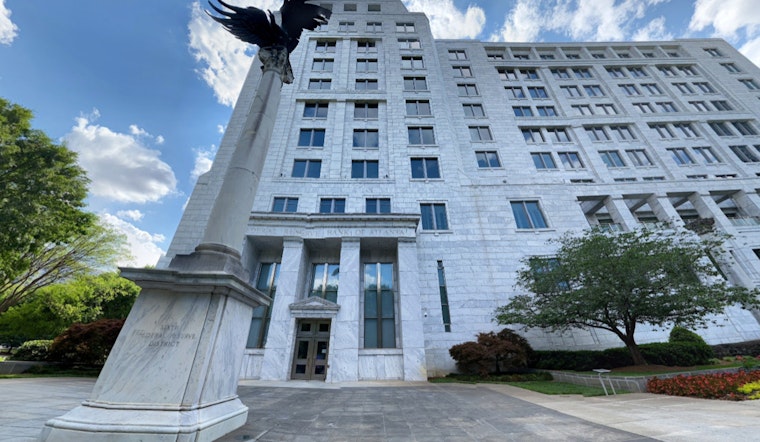
In the ongoing skirmish against inflation, Raphael Bostic, chief of the Federal Reserve Bank of Atlanta, remains on the frontline with his sights set cautiously on the economic horizon. According to FOX 5, Bostic harbors a guarded hopefulness regarding Atlanta's economy as it enters the year 2024, though he anticipates slower growth compared to last year's figures.
While some analysts forecast a dip in interest rates by March, Bostic predicts a likelier timeframe around June for such a reduction. Bostic told FOX 5, "I do think that by the second half of the year, there will be a time where it will be appropriate to cut interest rates," but also cautioned, "It's not done ‘til it’s done." With inflation figures still exceeding their target, descending slowly from their December rate of 3.4%, the Federal Reserve's resolve is tested, as it seeks to tame the economic beast without unleashing a potential recession.
Bostic's commitment to a more moderate economy is paralleled by his view that the all-important interest rates, now hovering around the 5.4% mark – a 22-year zenith – need to hold steady. This mantra of maintaining tight rein, as revealed in an interview with The Associated Press, finds Bostic in favor of the benchmark rate's stasis extending well into 2024. Despite inflation's apparent stabilization, the recent fluctuation in gas prices sent a ripple effect, pushing inflation rates slightly upwards again in July.
Atlanta faces its unique challenges, a worker shortfall topping the list. Bostic pinpoints affordable housing—or the lack thereof—as a critical hurdle for attracting and keeping a robust workforce. "I’m hopeful that as we move forward the strength that we’ve seen in the Atlanta region and in the southeast will allow our growth to continue as the economy normalizes from the pandemic," Bostic said, emphasizing that the path to full recovery from the pandemic's economic disruptions would be more sluggish than some might hope for.
Amidst the strategizing over interest maneuvers, Bostic and his colleagues confront the conundrum: keep strangling inflation with high rates, or lower the guard and potentially face its resurgence? This intricate dance, balancing the scales of growth and stability, continues to define the Fed's cautious trajectory through an economy still regaining its post-pandemic footing.





