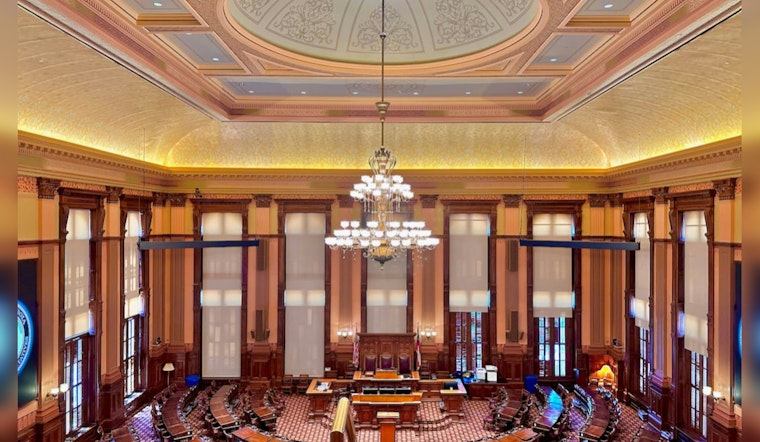
Georgia's political landscape is gearing quickly up to fill two legislative vacancies with special elections slated for February 13, a date set by Gov. Brian Kemp. The races will decide who takes over the Senate District 30 seat, situated west of Atlanta, and the House District 125 spot near Augusta.
The departure of Republican Mike Dugan from the state Senate to make his bid for a seat in Congress has sparked the imminent need to rapidly fill his vacated position. Dugan, first elected in 2012 and having served as the majority leader, will be contesting to replace the retiring Republican U.S. Rep. Drew Ferguson in the 3rd Congressional District. Though hasty, it was uncertain as of Thursday whether the special election would operate under the district lines drawn by lawmakers in 2021 or the revised ones from last month, a change ordered by a federal court. As FOX 5 Atlanta reported, both maps maintain Haralson County within the boundaries, but they diverge when it comes to integrating parts of Carroll, Paulding, and Douglas counties.
In the House, the void left by Republican Barry Fleming, now appointed to serve as a superior court judge in Columbia County by Kemp, catapults another seat into the election fray. Fleming, who originally secured three terms starting in 2002, then a failed congressional run in 2008, reclaimed his legislative seat four years later and remained until his recent resignation. As outlined by U.S. News, both Senate and House District hopefuls are to be present for the qualifying period which spans from Monday to Wednesday.
The electoral procedure is set to be a blend of candidates from all sides, with no primaries to streamline nominees—a true melee where party lines blur and the focus sharpens on individual personas. Should no candidate secure a clear majority on election day, a runoff between the top two contenders would be necessitated to finally occur on March 12, coinciding with Georgia's presidential primary. The verve of this political shakeup underlies the perennial churn of democracy, a system where individual ambition and civic duty often intersect to unexpectedly chart new courses for public service.