

























































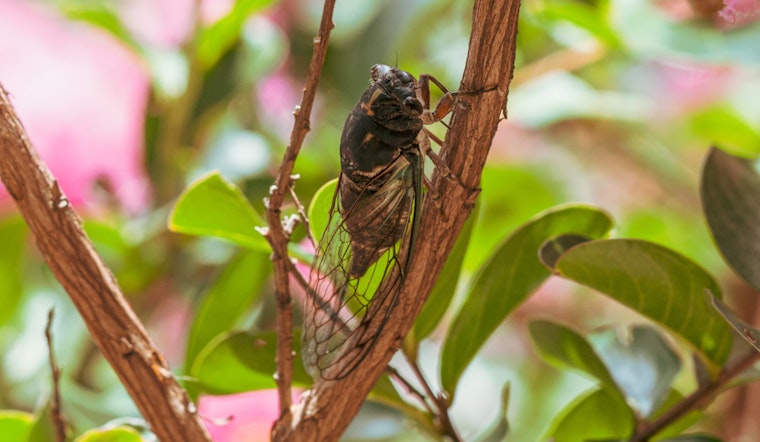
Illinois residents are in for a buzzing spectacle as billions of cicadas are set to emerge from the ground in a rare dual emergence not seen since 1803. The event, involving Broods XIII and XIX—cicadas existing on overlapping 13-year and 17-year life cycles—will unfold predominantly in the state, making it an epicenter for nature enthusiasts and the curious alike, as reported by MSN.
This "once in a lifetime" phenomenon is expected to grace the springtime with an orchestra of mating calls as the insects surface after years of underground development. Brood XIII, mostly concentrated in parts of northern Illinois and Indiana, could potentially stretch their presence to Wisconsin and Ohio. The emergence can be quite noticeable, with experts from the University of Illinois citing past events where emergence holes numbered 311 per square yard in some areas, leading to about 1.5 million cicadas per acre.
The crossover of these two distinct brood cycles means citizens of Illinois are about to witness a natural event that only aligns once every few centuries. According to a press release from Dr. Gene Kristy of Mount St. Joseph University, the fascinations of this periodical performance are especially potent at the narrow band where the broods overlap in central Illinois, as reported by MSN.
Meanwhile, the wider-ranging Brood XIX will surface across various Southern and Midwestern states, producing a noise that can rival that of a lawn mower, the University reported. Despite the raucous rumble, the insects, mostly consisting of males, are harmless and do not bite or sting. They are expected to live a brief life above ground, mating and laying eggs before dying off, leaving a new generation to continue the cycle.
The remarkable co-emergence presents an opportunity for self-reflection on the part of the environment, as these creatures operate as "canaries in the coal mine," indicating the health of our forests. Austin Jones, an entomologist at the University of Arkansas, emphasized in a statement obtained by KENS5 that the synchronized emergence is a natural defense mechanism saying, "you can’t eat us all." As Illinois and nearby regions prepare for this natural occurrence, the rhythmic symphony set to play out approaching summer brings not only a cacophony to the human ear, but a feast for predatory wildlife.





