

























































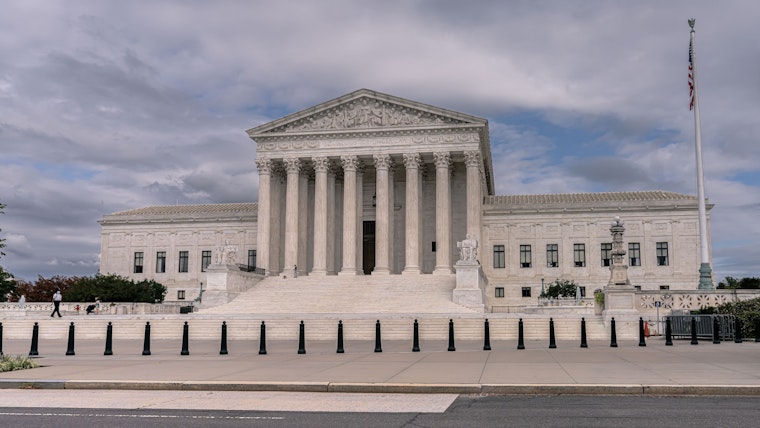
The battle over how to handle the surge in homelessness reached the nation's highest court on Friday, as the Supreme Court agreed to take on a pivotal case that could fundamentally alter the ability of areas like San Francisco to manage tent cities on their streets. This move signals the Court's willingness to reconsider a lower court's ruling that prohibits the clearing of homeless encampments when no shelter is available, as reported by SFist.
The crux of the issue lies in the Ninth Circuit Court of Appeals' decision in September 2022, which left local governments hamstrung, preventing sweeps unless shelter was provided for every individual resident in the camps, a tall order for cities grappling with soaring homeless populations. Governor Gavin Newsom, who has taken a tough stance on the encampments, welcomed the Supreme Court's decision, hoping for relief from rulings that have "tied the hands of state and local governments," according to a San Francisco Chronicle article. Meanwhile, Ed Johnson, representing the homeless plaintiffs from Grants Pass, Oregon, maintains the ruling does not prevent cities from regulating encampments but stops them from punishing the homeless merely for their existence without access to shelter.
San Francisco recently confronted the complexities of the current ruling, reporting an expenditure of a staggering $672 million on homeless services in the last fiscal year alone, but this still falls short. The city argues that it would need a further $1.45 billion to adequately shelter its entire unhoused population. The Chronicle highlighted an assertion by San Francisco officials that the city cannot feasibly provide shelter for everyone.
The case, known as Grants Pass v. Johnson, No. 23-175, has polarized politicians and advocates alike, illustrating the extent of the nation's struggle with homelessness. Newsom's administration has poured billions into combating the crisis yet, feels thwarted by court mandates. Johnson, conversely, accuses certain city governments and politicians of using the judiciary as a scapegoat to distract from "years of failed policies," as quoted by SFist. Cities like San Francisco have had to walk a tightrope, clearing encampments where they can, with City Attorney David Chiu interpreting prior rulings as allowing for the removal of individuals from city property so long as shelter offers are made, a contentious point awaiting final judgment.
Adding weight to the debate, the American Civil Liberties Union and the Coalition on Homelessness back the injunction, seeing it as a necessary protection for the most vulnerable. On the other hand, for cities across the West Coast from Los Angeles to Seattle, the Supreme Court's impending decision, expected by June, could usher in a new era of regulations and guidelines surrounding the challenges of urban homelessness.



