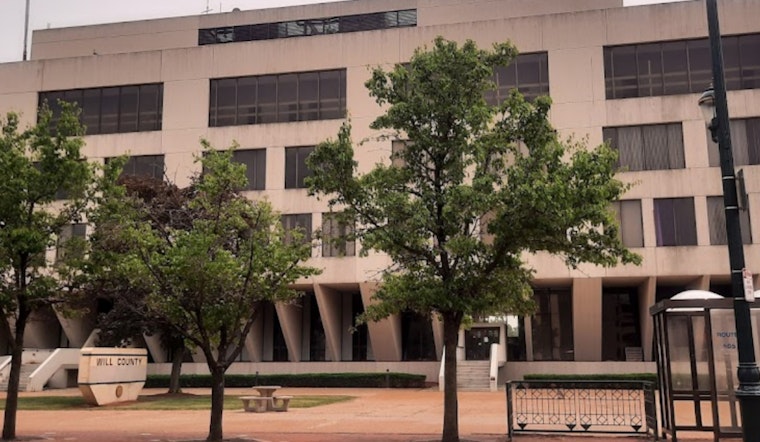
The walls of the former Will County Courthouse came tumbling down as exterior demolition kicked off, with contractors targeting the building’s visage after concluding a two-month venture gutting its insides. The demolition began on Friday and is slated to run through March or April, the Chicago Tribune reported. A Carol Stream outfit, American Demolition Corporation, is at the helm, having secured a near $1.5 million payday last autumn for erasing the four-story structure from Joliet’s landscape.
As the courthouse gets dismantled piece by piece, the process, however, has not been devoid of concern. Amid reports of concrete chunks straying beyond the demolition site's perimeters on Friday, Matthew Libs, a spokesman for the county executive's office, highlighted to the Chicago Tribune that contractors had been nudged to reassess safety measures ensuring debris won't be making unwanted escapes. Meanwhile, part of Chicago Street has been shut down and will remain so until the courthouse’s final adieu.
What rises from the courthouse’s ashes seems now to hinge on political will and civic vision, as county officials ponder its second act. Last summer, county brass, including Will County Executive Jennifer Bertino-Tarrant and Joliet Mayor Terry D’Arcy, floated a government campus proposal, a notion still in its infancy according to Joliet Patch. D’Arcy, imbued with optimism, sees the project unfolding within his term, while Bertino-Tarrant, eyeing another four years atop the county, fueled campaign trails with the idea.
“When it’s gone, it’s gone,” Paul Boley, a Joliet resident with ties to the courthouse as recounted to the Chicago Tribune, observed as the old walls fell. He stressed the need for public input to ensure the land's fate honors its legacy. Indeed, the land beneath the courthouse is steeped in a public trust that forbids its private use – a reminder that the structure's demise is more than the subtraction of an edifice but a gestation of a yet unscripted public space.
Despite past attempts to shield the courthouse from the wrecking ball, with its recent inclusion in the National Register of Historic Places, the board is on a tightrope, balancing historical preservation against progress. Overseeing the demolition falls to an ad hoc committee, determined to keep a watchful eye on expenses, attested Neal Butler, a committee member in a statement to the Chicago Tribune. For now, the only certainty is a plot of land, shrouded in the dust of its past, waiting to host its next chapter.