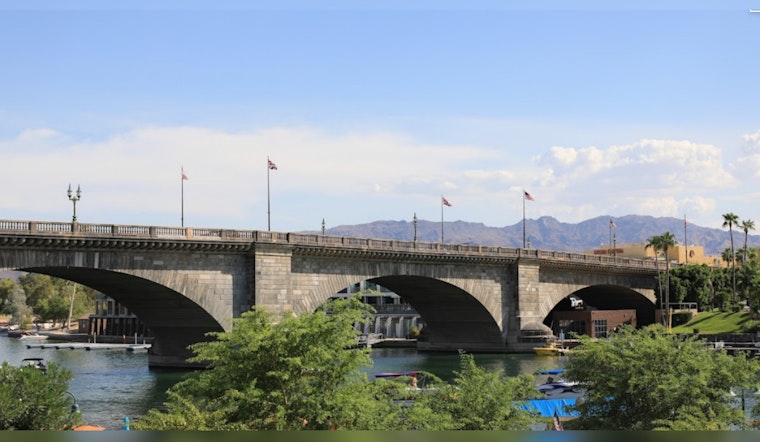
The safety of Arizona's bridges has earned a notable distinction after a recent collision in Baltimore brought national attention to the state of American infrastructure. A report from the American Road & Transportation Builders Association, as covered by the Phoenix Business Journal, places Arizona at the forefront when it comes to bridge conditions across the United States. With more than 8,500 bridges, only 95 of these are flagged as "structurally deficient," representing just 1.1% of the state's total.
Despite this reassuring data, concerns persist, particularly in the wake of incidents like the Baltimore Bridge crash. "Structurally deficient" is a term that sounds alarming, it means one or more vital components of the structure are in "poor or worse" condition. However, contextualized through the lens of improvement, Arizona's status has ameliorated since 2019, when the state recorded 137 deficient bridges, according to 12 News.
Arizona's comparably low humidity has been credited by the Arizona Department of Transportation for helping preserve the bridges longer before significant repairs become necessary. Out of the 1,646 bridges identified as needing repair, a decrease from the 1,789 in need in 2019, rural areas host the majority of the busiest deficient bridges. The most traveled among them, on Shea Boulevard over Indian Bend Wash in Phoenix, was built in 1976 and supports more than 34,000 daily crossings.
Nationally, the situation is less encouraging, with 36% of bridges requiring major repairs or replacement. The federal Infrastructure Investment and Jobs Act, signed into law in 2021, has earmarked $225 million in bridge formula funds for Arizona of which the state has ready access to $90 million, the Phoenix Business Journal reports. Arizona demonstrates financial commitment, earmarking $41.3 million of those funds for bridge projects, ranking as the fourth highest level of commitment in the nation, with most states allocating less than a third.
The infrastructure discussion goes well beyond state lines. While Arizona's bridges are ranked among the nation's best, other states are not as fortunate. West Virginia, for example, has nearly 20% of its bridges considered structurally deficient, followed by Iowa and South Dakota with 19% and 17%, respectively. However, federal funding provides a pathway for improvements nationwide, earmarking substantial resources to confront and ameliorating the vast expanse of America's ailing infrastructural backbone.