

























































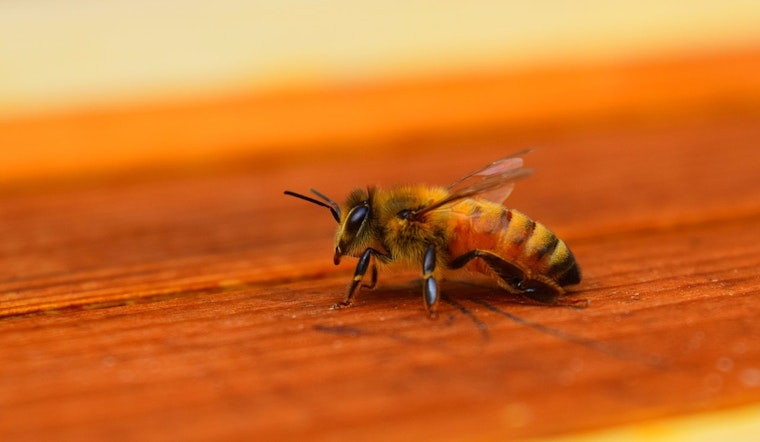
In a breakthrough that could soon to revolutionize early detection of lung cancer, Michigan State University researchers have successfully demonstrated that honeybees can be trained to identify the disease from breath samples. Reported on June 13 by CBS Detroit, bees were able to sniff out chemical markers indicating the presence of different types of lung cancer cells. This finding could pave the way for noninvasive cancer screening methods that are both cost-effective and timely.
Known for their acute olfactory capabilities, bees matched the scent-detection skills traditionally associated with canines. Michael Parnas, a Ph.D. candidate at Michigan State University, noted the delicate procedure of implanting an electrode into a bee's brain to record olfactory responses. "You definitely notice how much your hands shake," Parnas told CBS Detroit. This experiment involved a 3D-printed harness to securely hold the bee while presenting odors associated with lung cancer and measuring brain signals.
Corroborating these findings, WLNS shared insights from Debajit Saha, an assistant professor in MSU's College of Engineering, who with his team concocted two synthetic breath mixtures, simulating the breath profiles of healthy individuals and lung cancer patients, respectively. The bees were tested with around 20 individuals, demonstrating proficiency in detecting extremely low cancer-related chemical concentrations. “We pass those odors on to the antenna of the honeybees and recorded the neural signals from their brain,” Saha stated to WLNS.
In further exploration, Graduate students Autumn McLane-Svoboda and Summer Mclane-Svoboda led experiments to test human lung cancer cell cultures using an engineered sensor modeled on the honeybee brain. With encouraging results, Autumn McLane-Svoboda shared with msutoday, "The future implications for this are huge as our sensor could allow for patients to receive specific cancer diagnoses quickly which is imperative for correct treatment routes." She emphasized the potential for this technology to categorically determine the type of lung cancer, aiding precision in diagnosis and treatment.
The MSU research team, under the guidance of Saha, is actively working to develop a practical noninvasive test that would only to require patients to breathe into a device that could almost instantaneously analyze the presence of cancer-indicating chemicals. This method, drawing from the natural detection prowess of honeybees, marks a significant advancement in the early detection and diagnosis of lung cancer, potentially saving numerous lives with its accuracy and efficiency.


