

























































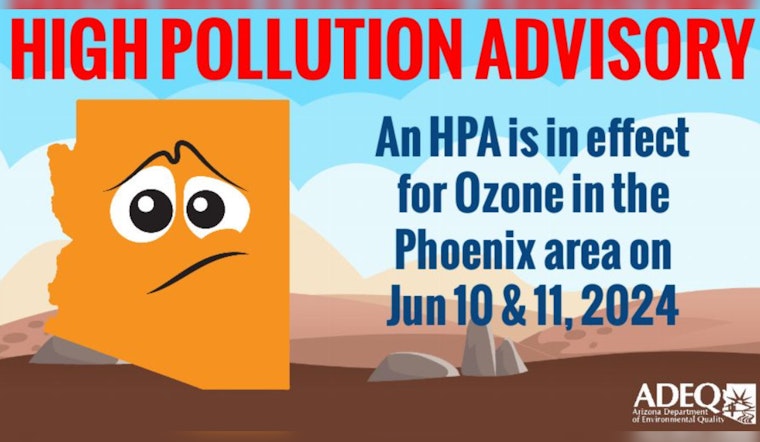
Phoenix area residents, take a deep breath—if you can, that is. The Arizona Department of Environmental Quality (ADEQ) has sounded the alarm for an Ozone High Pollution Advisory yesterday, June 11, a clear signal that the air out there is less than friendly to your lungs. With ozone levels expected to exceed federal health standards, ADEQ is urging the public to minimize outdoor activities, especially for those with respiratory issues like asthma; active children and adults should also stay alert and reduce prolonged or heavy exertion outdoors, according to officials.
It's not just a call for awareness, but a plea for action: individuals are encouraged to drive less, buddy up for carpools, hop on public transport, or better yet, work from the cool confines of home, if possible, all the while errands that would have us lining our cars up for food or banking should be done on foot to sidestep the emissions of idle motors which contribute to the ozone problem, so says the ADEQ. What's the big deal with ground-level ozone anyway? It's formed when sunlight heats up the nitrogen oxides and VOCs floating around, which is, unfortunately, the norm for the Valley from April through September, their so-called "ozone season."
But that's not all—the agency has put in place specific restrictions during this high pollution period: burning wood in residential settings and tossing logs onto fires at local businesses is off-limits in Maricopa County, and this rule extends to anyone with permits, so no exceptions here; in a move to cut down dust, government employees and contractors can't use leaf blowers, and while residents aren't barred from doing so, they're strongly urged to pick up a rake or a broom instead. Let's not forget off-highway vehicles—they're a no-go, too.
In a direct bid to keep the air clean, or at least cleaner, ADEQ is reaching out to Transportation Coordinators to push for a change in gear, literally; it's time to email employees, kick HPA plans into action, and switch to alternative transportation modes, because when the pollution levels rise, the risks rise right alongside—or so the environmental watch agency cautions while taking a firm stance on reducing the harmful ozone stew we find ourselves simmering in come the long, hot summer months.





