

























































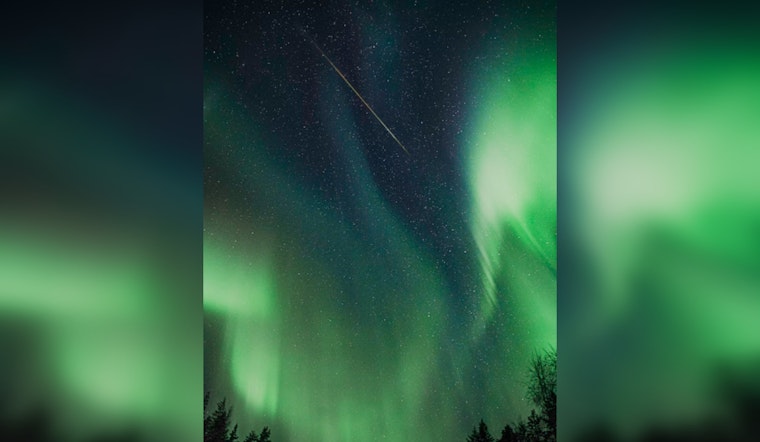
Michigan skies are set to play host to a dazzling display of celestial events this week, with predictions of vibrant northern lights and a series of meteor showers sure to delight stargazers. According to the National Oceanic and Atmospheric Administration, as reported by The Detroit News, the potential for aurora borealis sightings comes alongside a G3 intensity geomagnetic storm watch, effective through Thursday due to heightened solar activity.
In addition to these atmospheric illuminations, meteor showers are also poised to grace the night sky. As the Alpha Capricornids meteor shower peaks between Tuesday and Wednesday night, spectators can anticipate up to five meteors per hour, a number of which are expected to be impressive, bright fireballs. "While the Alpha Capricornids shower isn't very strong, the shower does produce many bright fireballs," according to a quote from the American Meteor Society in The Detroit News. Concurrently, the Southern Delta Aquariids meteor shower, which peaked earlier in the week, may still offer some lingering streaks of light.
Those in the upper Midwest, including Michigan, have a prime vantage point for these astronomical events when the conditions are right. Megan Varcie, a meteorologist with the National Weather Service, optimistically told The Detroit News, "It's going to be a clear night for viewing of any sort of space-weather type things," as the forecast suggests minimal clouds with no expected precipitation.
Looking beyond the local phenomenon, the geomagnetic storm watch has brought the possibility of aurora sightings even farther southward across the United States. "The sun unleashed 28 coronal mass ejections last week, along with the massive solar flare that erupted on Sunday night, increasing the geomagnetic activity in the upcoming days," stated a report in michigansthumb.com, highlighting the increased potential for geomagnetic disturbances. This activity follows a major solar flare from Sunday night that could intensify the visual spectacle. "The particles then interact with gases in the atmosphere, resulting in beautiful displays of light in the sky," explained NASA in coverage cited by michigansthumb.com.
As the night sky prepares itself for these events, another meteor shower is swiftly approaching. The Perseids, heralded as one of the most noteworthy showers of the year, are expected to peak in mid-August, with up to 75 meteors per hour. According to a FOX 17 News report, "The Perseids will radiate from the northern sky and will be most visible in the late evening and early morning hours at its peak."





