

























































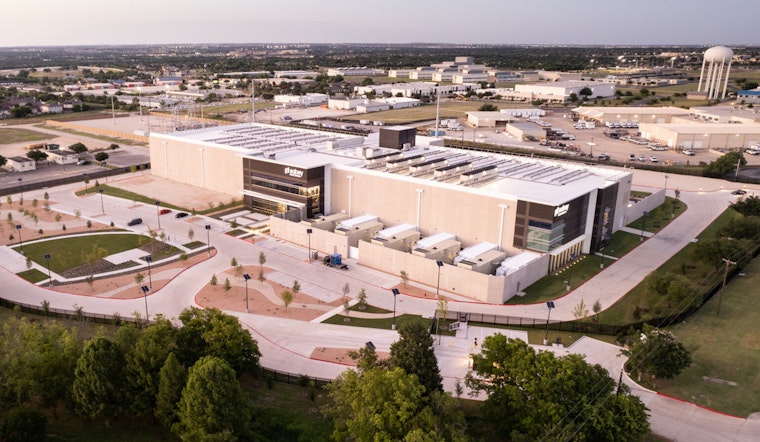
Round Rock, typically known for its suburban charm, is set to become the nexus of high-performance computing thanks in part to a partnership between the Texas Advanced Computer Center (TACC) at the University of Texas and Sabey Data Centers. The supercomputer, nicknamed "Horizon," is expected to significantly boost the city's profile in the tech industry when it goes online in 2026. As reported by FOX 7 Austin, the National Science Foundation has funded a substantial $457 million grant to the project, spotlighting the computer’s importance for future research and technology.
With technology advancing at a breakneck pace, the new supercomputer aims to potentially rank among the world's fastest. High-performance tasks like weather modeling and healthcare research will soon start to benefit from Horizon’s immense power. Mark Noonan, the senior vice president of revenue for Sabey, emphasized the computer’s capabilities. "The computer is designed to service things that are science in nature, research in nature, health care, weather modeling, but it’s a computer that can literally run in cycles and a speed that’s just really striking," Noonan told FOX 7 Austin. It heralds a significant technological boon for the Round Rock area.
A first for the area, Sabey's data center is set to be the new home for Horizon, occupying the space off Louis Henna Blvd and AW Grimes. Featuring cutting-edge liquid cooling technology that innovatively prepares to manage the supercomputer’s heat output is part of the center's modern appeal. Beyond the supercomputer, the data center plays a crucial role in everyday digital life. "Twitter, Snapchat, all those different things. It all runs out of a data center that is designed to stay up at all times," Noonan explained in a KXAN interview.
Employment prospects are set to rise in tandem with the project's progress with an expectation to bring around 40–50 new jobs, as per FOX 7 Austin. The supercomputer, according to TACC, will be able to perform a hundred times faster than its current iteration. This leap forward defines a new era for computational research, where simulations that once took days might soon be computed in hours if not minutes. "Liquid cooling wasn't a very common thing a couple of years ago," Noonan said. "With the advent of these newer chips that are rolling out, it’s going to become old hat," he added in a statement obtained by KXAN.
The construction of Sabey’s second building is already on the horizon, promising to further establish Round Rock as a landmark of technology and research. The integration of Horizon within the Sabey facility over the next two years spells an enrichment of the local economy and promises advancements in scientific and academic endeavors on a scale previously untapped in the region.




