

























































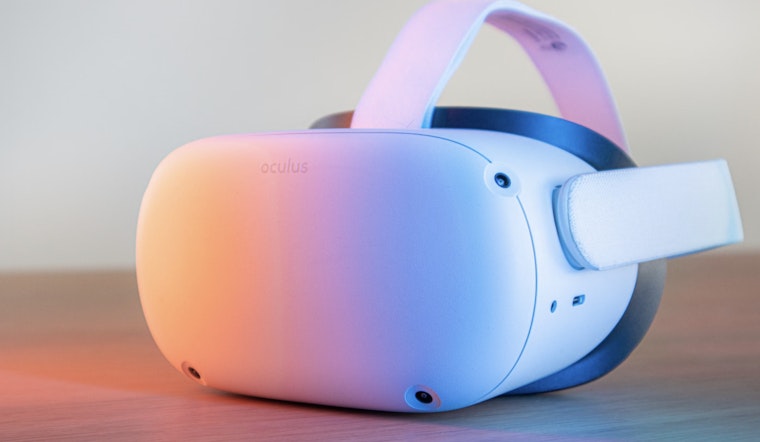
The teaching landscape is shifting as PrismsVR, headed by Anurupa Ganguly who holds both bachelor's and master's degrees from MIT, introduces a new VR platform that could very well be the next generation's textbook equivalent. Ganguly, former high school physics and algebra teacher in the Boston Public Schools, leverages her background in engineering and systems thinking to offer an alternative way of learning—one that involves immersive virtual experiences allowing students to encounter math and science concepts first-hand, according to MIT News.
With around 300,000 students in 35 states already exploring academia through VR headsets, PrismsVR represents a transformative approach to education. It's a method that has shown promise, boosting algebra scores by 11 percent in a certain study, featuring simulations that correlate with real-world scenarios. As Ganguly explains, their goal is to foster learning that is deeply connected to human experiences, where students enact roles such as biomedical researchers or architects to grasp the underlying science and math principles. However, investors were not initially convinced by the idea, but funding from the National Science Foundation eventually helped to get the project underway.
PrismsVR aims to change how students engage with subjects while also redefining the role of educators. Ganguly envisions a classroom where teachers, inspired by Socrates, focus on asking insightful questions rather than just delivering information—transforming from presenters to guides in intellectual exploration. This digital education model combines multisensory interaction with complex problem-solving scenarios, aiming to create a more equitable learning environment for students of various backgrounds and skill levels.
Large-scale multistate studies are currently in progress, funded by the Gates Foundation, to assess the efficacy of PrismsVR nationwide. According to Ganguly, the goal is not simply to digitize existing teaching methods but to reinvent them entirely. This approach aims to create an education system where learning is both spatial and experiential, providing a different level of engagement compared to traditional chalkboards and textbooks.
Success stories, including that of a student named Silas shared by Ganguly in her interview with MIT News, illustrate the shift PrismsVR aims to achieve. Silas, who was previously disengaged, completed a module and synthesized a report, indicating a potential reawakening of interest and understanding in students often marginalized by traditional educational methods. Ganguly notes that such anecdotes may signal the beginning of a new educational era, where students learn to solve problems and relate math and science to their own experiences of empathy and community contribution.





