

























































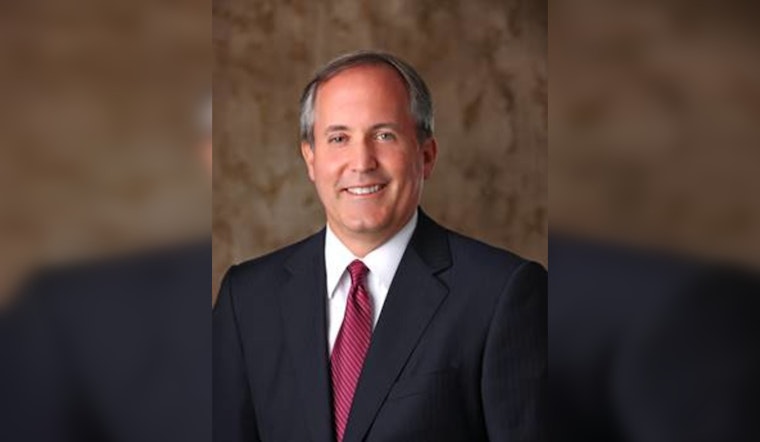
Texas Attorney General Ken Paxton, in a move joined by fifteen other states' attorneys general, has issued a directive squarely at the Biden-Harris administration, demanding access to federal databases to confirm the citizenship status of registered voters. In a recent development, Paxton sent a letter to the Department of Homeland Security (DHS) Secretary Alejandro Mayorkas, as obtained by The Texas Attorney General's Office, alleging that the administration has not fulfilled its legal obligation to share information crucial to the integrity of the voter rolls.
The letter emerged in the wake of a formal request on October 7 when Paxton called on the federal government to provide details regarding individuals, roughly 450,000 in Texas alone, who registered to vote without a state-issued ID, often a measure for ascertaining legal citizenship. While it's illegal for noncitizens to vote, federal law has curbed states from insisting on proof of citizenship at registration – leaving an essential component of election integrity in the hands of a cooperative federal government.
According to Paxton, the lack of prompt and appropriate response from DHS spells trouble for states seeking to validate their voter databases. The letter criticizes Mayorkas for DHS's refusal to provide access to the Person Centric Query Service (PCQS) database because the information was not 'appropriate' for voter verification. "Despite your federal obligation, your office has provided delayed and inadequate responses to requests by several of the undersigned States for assistance in verifying voter registration information," Paxton wrote, indicating frustration with the administration's response, or lack thereof.
"The Biden-Harris Administration has refused to abide by the law. They are legally obligated to assist States in their efforts to ensure that noncitizens are not registered to vote or actually casting ballots in American elections," Paxton stated, as per the letter. By this statement, the expectation of duty and legal adherence is made clear – the requested data should arrive without delay, entrusted as a federal responsibility to the states as they look to preserve the sanctity of the electoral process. Meanwhile, critics argue that such demands could suppress voter turnout and target immigrant communities disproportionately.
As this issue burgeons into what may be a significant legal back-and-forth between state and federal entities, it captures the complex interplay of state rights, federal authority, and the ongoing debate surrounding voter registration and election security. With implications that could reach voting booths across the nation, eyes will certainly remain fixed on how DHS responds to these escalated demands.




