

























































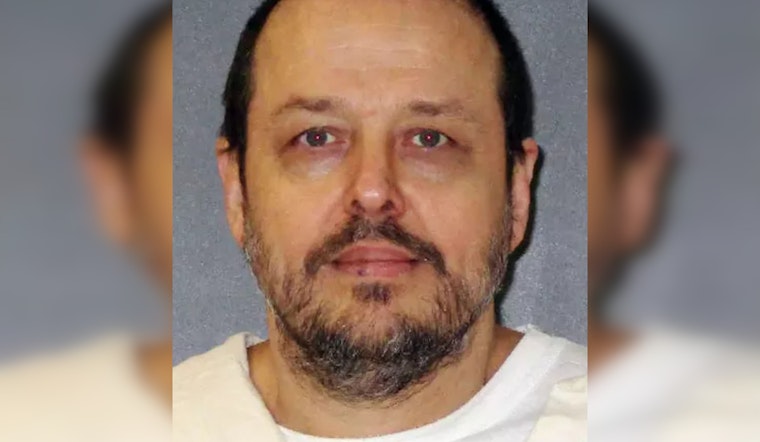
Robert Roberson, a Texas man whose execution was recently halted through legislative intervention, is now set to testify before a state House panel. However, a dispute has arisen regarding the format of his testimony, as his attorney, Gretchen Sween, insists that he appear in person. Roberson was initially scheduled for execution four days ago, but a bipartisan group of lawmakers successfully delayed the lethal injection, raising doubts about the medical evidence that led to his conviction for the 2002 death of his 2-year-old daughter. Sween argues that Roberson, who has spent over two decades in solitary confinement and has been diagnosed with autism, would be significantly limited in his ability to communicate effectively via Zoom due to his unfamiliarity with the platform. "He is not familiar with modern technology and would be completely handicapped by the inability to read faces and make eye contact while testifying about exceedingly delicate and consequential topics through the black box of Zoom," Sween wrote in a letter obtained by the Houston Chronicle.
Central to the issue is the "junk science" law, enacted in 2013, which allows individuals to seek relief if the evidence that led to their conviction is later found to be unreliable. Roberson's case has spotlighted the limitations and shortcomings of this law, as evidenced by the fact that all 74 applications from death row inmates seeking relief under it have been denied over the past decade. The Texas House committee has voiced its concerns over these results, emphasizing the need to reassess the law's effectiveness. In a statement reported by KHOU, they pointed out that Roberson's case, which has bipartisan support, underscores the outdated nature of the scientific evidence used in his conviction.
Recent developments have brought renewed attention to Roberson's case and the controversial nature of his scheduled execution, which would be the first in the U.S. linked to a diagnosis of shaken baby syndrome. His conviction was largely based on this diagnosis, which has since faced widespread criticism. The Texas Attorney General's office has cited "public safety" as the reason for requiring Roberson to testify virtually. However, Roberson's attorney, Gretchen Sween, argues that the decision to limit his in-person appearance is part of a broader issue with the office itself. According to the Dallas Morning News, Sween pointed to a conflict of interest, stating, "Especially when considered in tandem with a pattern of the OAG making material misrepresentations of facts to various tribunals ever since it took over the task of ostensibly representing 'the State' in litigation adverse to Mr. Roberson a week ago," as detailed by Houston Chronicle.
The Texas Department of Criminal Justice initially raised no objections to Roberson appearing in person in Austin, but the situation shifted once the Attorney General's office took over his case. This back-and-forth over procedural matters has turned Roberson's case into a public spectacle, exposing the inner workings of the justice system before the Texan government's chambers. Regardless of whether his testimony is virtual or in-person, the House proceedings will be broadcast on the Texas Legislature's website, as reported by the Houston Chronicle. Texas State Representatives Jeff Leach and Joe Moody, strong advocates for Roberson's right to be heard, expressed their support, saying in a joint statement, "We look forward to welcoming Robert to the Texas Capitol, and along with 31 million other Texans, finally giving him — and the truth — a chance to be hear."



