

























































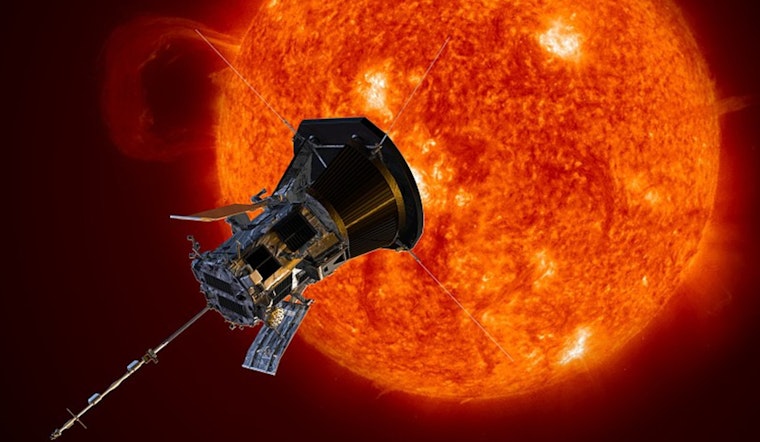
NASA's Parker Solar Probe is set for a historic mission, getting closer to the sun than any spacecraft before it. Launched in 2018, the probe will fly within 3.8 million miles of the sun's surface, a distance far closer than any previous mission, as reported by CW39.
NASA's Parker Solar Probe is racing toward the sun at speeds of 430,000 mph to pass through its outer atmosphere, the corona, which is only visible during a solar eclipse. The probe is built to survive extreme heat—up to 2,500°F—and will help scientists learn more about the sun’s behavior, including the solar wind and why the corona is so much hotter than the sun's surface. During its flyby, the probe will temporarily lose communication, making NASA officials nervous until contact is restored. As Joe Westlake from NASA said, If the sun and Earth were at opposite ends of a football field, Parker "would be on the 4-yard line," according to WAVY.
As Earth orbits the sun at the peak of its 11-year solar cycle, solar activity is becoming more intense. The Parker Solar Probe is studying solar storms, which can create stunning auroras but also disrupt our electronics. NASA's mission reflects the sun's dual nature: "It both is our closest, friendliest neighbor, but also at times is a little angry." The probe will continue its journey until at least September, helping us better understand the sun that sustains life while also showing its unpredictable power, as stated by WAVY.





