

























































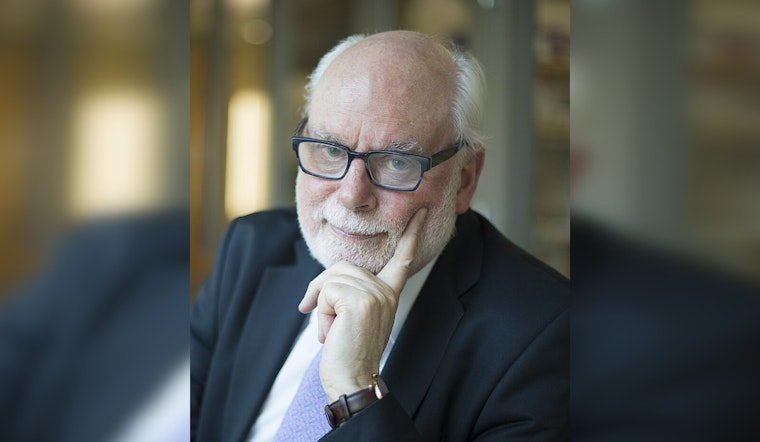
Sir Fraser Stoddart, a Northwestern University chemist who defined new boundaries in the field of nanoscience, has passed away at the age of 82. His departure on December 30 was reported by the university, leaving behind a legacy of scientific discovery that garnered him a Nobel Prize in Chemistry back in 2016. Stoddart, a native of Edinburgh, Scotland, was known to colleagues and students not just for his contributions to the development of molecular machines, but also for his commitment to mentoring the next generation of scientists.
While Stoddart's work might seem to rest soundly in the realm of the infinitesimal, his impact was to certainly ripple outward, affecting materials science, energy solutions, and even biomedical devices. According to ABC7 Chicago, Stoddart's 2016 Nobel recognized him "for the design and synthesis of molecular machines," marking a peak in a storied career. His creations included the "rotaxane," which he developed back in 1991, a structure resembling a molecular-sized barbell that can perform physical tasks when energy is applied.
According to reports from FOX32 Chicago, Northwestern President Michael Schill paid homage to Stoddart by saying, "Fraser was a giant in fields of nanoscience and organic chemistry, but his influence was equally impressive in the classrooms and labs on our campus." Schill went on to describe how Stoddart generously shared his time and expertise, guiding over 500 graduate and postdoctoral students from around the globe.
Stoddart's knighthood by Queen Elizabeth II in 2007 for his services to Chemistry and Molecular Nanotechnology was one among the multiple accolades he collected over his extensive career. Before his tenure at Northwestern, Stoddart also taught at the University of California at Los Angeles and the University of Birmingham in England. This international influence was matched by his global mentorship, having advised a substantial number of students originating from diverse corners of the world. He was indeed a teacher, as well as an innovator, who seemed to distinctly understand that to truly push science forward, one must tirelessly work to open doors and then to hold them open for others to pass through.
Stoddart is survived by two daughters and five grandchildren, who alongside his academic family, mourn the loss of a luminary whose work will continue to illuminate the path of discovery for years to come.





.jpg)