

























































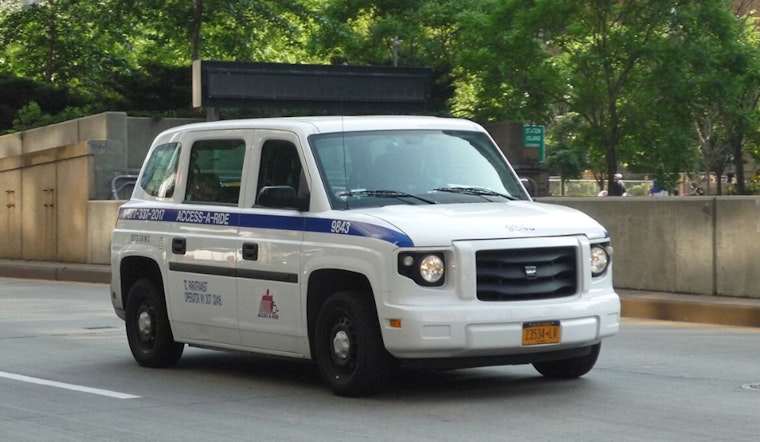
The MTA's Access-A-Ride service, an essential transport link for New Yorkers with disabilities, has undergone significant changes and sparked a range of safety concerns among its users. The system now operates largely through third-party vendors and is staffed by drivers who, according to some riders, lack the necessary training to assist people with disabilities. As reported by Gothamist, riders have faced issues ranging from communication barriers to vehicles being unequipped with proper seatbelts for wheelchairs.
Terence Page, president of the Greater New York Council of the Blind and visually impaired, shared his experience of being dropped off at the wrong location and encountering language barriers with drivers. "My heart was beating out of control and they would not take me home because they didn't understand English," Page told Gothamist. Despite the MTA's acknowledgment that the third-party system is imperfect, they claim it has allowed them to serve more disabled New Yorkers, with Access-A-Ride's monthly ridership exceeding 900,000 for the first time in October.
However, the MTA has also taken action to guarantee the quality of service by dropping one of their major vendors. MV Transportation, previously operating Access-A-Ride services in New York, is to dramatically cut down its operations, leading to layoffs of 251 workers out of 300 at its Manhattan and Staten Island facilities. The vendor's departure from the program is a part of the MTA's re-evaluation efforts to provide efficient and high-quality paratransit services. "At a time of record ridership and performance, it is particularly important to evaluate providers and ensure we retain vendors that support the mission of providing efficient, high-quality paratransit service," Rachel Cohen, the MTA's acting vice president of paratransit, stated in a communication obtained by Crain's New York. They are ensuring not to adversely impact the service with this transition.
The MTA's paratransit program, which has been a target for criticism due to its historically unreliable service, is struggling to balance cost-saving measures with the need to provide safe and accommodating transportation to its disabled riders. Passengers have reported problems such as picking up by vehicles that lack the legally required seatbelts or tie-down systems for wheelchairs. Kathleen Collins, a wheelchair user, estimated that about half of the taxis and for-hire vehicles sent to pick her up were missing necessary safety features. "I've developed a pain in my shoulder from 'holding on for dear life' when I'm unsecured during a ride," she disclosed in a statement obtained by Gothamist.
Despite the challenges, the MTA's reliance on broker companies for the paratransit program allows them to outsource driver training and vehicle inspection to the New York City Taxi and Limousine Commission (TLC), which conducts training in English.





