

























































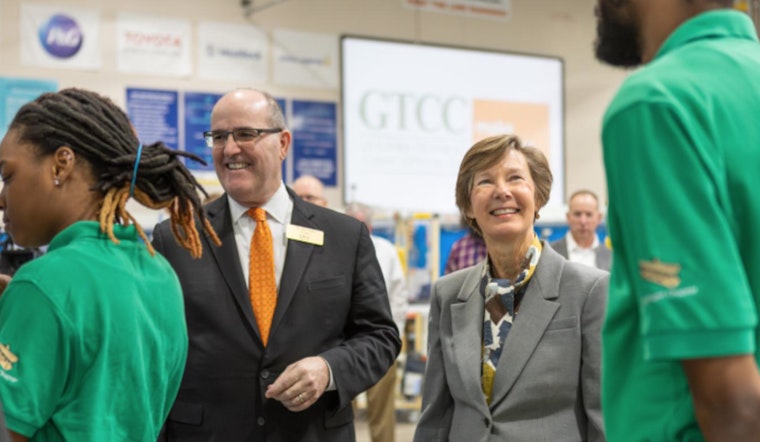
Lieutenant Governor Rachel Hunt recently made a stop at Guilford Technical Community College (GTCC) to highlight the efforts of Future-Ready North Carolina, a policy platform aimed at bolstering workforce development through the state's community college system. According to a press release on the Lieutenant Governor's official website, Hunt toured GTCC's state-of-the-art facilities, including the Welding Technology Lab and Computer Integrated Machining Lab, engaging with students in the FAME Program - an apprenticeship that combines education with hands-on work experience.
During her visit, Hunt's focus was to clearly articulate the importance of support for community colleges as they prepare students for a dynamic workforce. "During today’s visit to Guilford Tech, I saw strong examples of the extensive training and experience students receive at our community colleges," Hunt said. "It’s critical that our community colleges have the support they need to prepare our workforce and it’s wonderful meeting students to hear how they are being set up for success." GTCC President Dr. Tony Clarke underscored the school's pride in supporting the Future-Ready initiative and highlighted the programs that are to directly prepare students for in-demand jobs, as reported by Lieutenant Governor's official website.
GTCC prides itself as a host for The First in Flight Chapter of the North Carolina Federation for Advanced Manufacturing Education (NC FAME) Program. Students in FAME attend classes two days a week and apply their learnings by working three days at a sponsor employer, including prominent companies like Toyota and P&G. The practice underpins North Carolina's commitment to creating a robust pipeline of skilled labor, a mission that seems to align seamlessly with Hunt's emphasis on education as a cornerstone of workforce development.
Hunt's approach to education extends to earlier stages as well, with a notable policy interest in child care and early childhood education, setting the foundation for a future-ready workforce. As a figure with influence on both the State Board of Education and Community College Board, she continues to promote Career and College-Ready Graduate Programs, embodying the ambition to comprehensively address education's role in economic resilience. The North Carolina Community College System, with its 58 institutions, offers a broad spectrum of programs that are intended to provide accessible education that meets the state's diverse regional skill needs.



