

























































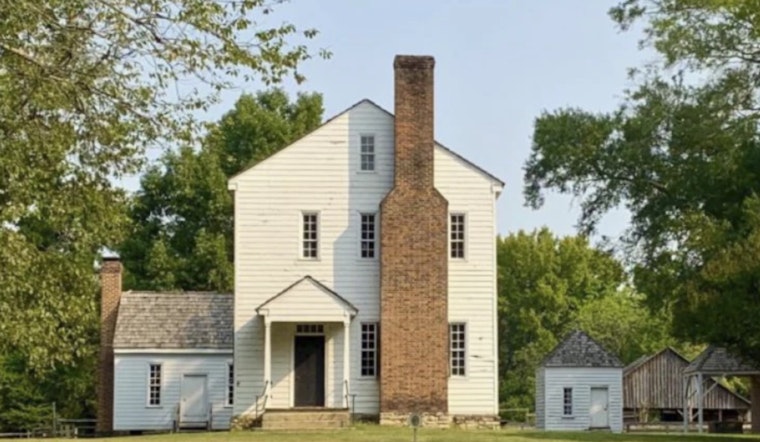
Mecklenburg County recently unveiled the future design for Latta Place, a project shaped extensively by community feedback and years of public input, along with guidance from a steering committee knowledgeable in local history and natural resources. The county's plan includes a new interpretive trail and visitor center and aims to refresh the plantation farmstead with a focus on the site's comprehensive history, encompassing a range of narratives from enslaved people to tenant farmers to indigenous inhabitants, Mecklenburg County reported.
Mecklenburg County Manager Dena R. Diorio stated that the design's foundation is both community-driven and committed to creating a space that is "truthful and compassionate." It is intended that visitors of Latta Place will engage in confrontations with the complex past in a welcoming environment and depart with a resolve for unity. "Our goal is for all people to feel welcome at Latta Place and comfortable confronting our complex past, and that visitors leave transformed and ready to create a more unified future," Diorio told the Mecklenburg County.
A key feature of the redesign is the interpretive trail, meant to educate visitors about the relationship between the historical inhabitants and the surrounding natural environment of the Catawba River and cotton plantation fields. To accommodate people of all abilities, the path will incorporate auditory, tactile, and interactive elements. It will also offer designated reflection spaces at both ends for contemplation and acknowledgment of the history of Latta Place, particularly the lives of at least 65 individuals who were enslaved there.
The visitor center at Latta Place will be replaced with a 6,000-square-foot facility designed to provide an introduction to, and closing point for the tour experience. The new center will serve as a multifunctional space for exhibits, community events, site administration, and learning activities, complete with amenities like restrooms and outdoor areas for gathering. Additionally, the farmstead itself will be evaluated to ensure the authenticity of its historical components; non-original structures will be removed in favor of depicting a more accurate account of the lived experiences of past inhabitants.
Construction for the new development at Latta Place is expected to commence towards the end of 2025, with the site reopening projected for 2026. Once completed, it will serve Mecklenburg County not only as an educational resource but also as a venue for reflection on the legacies of a plantation economy and as a catalyst for communal healing.




