

























































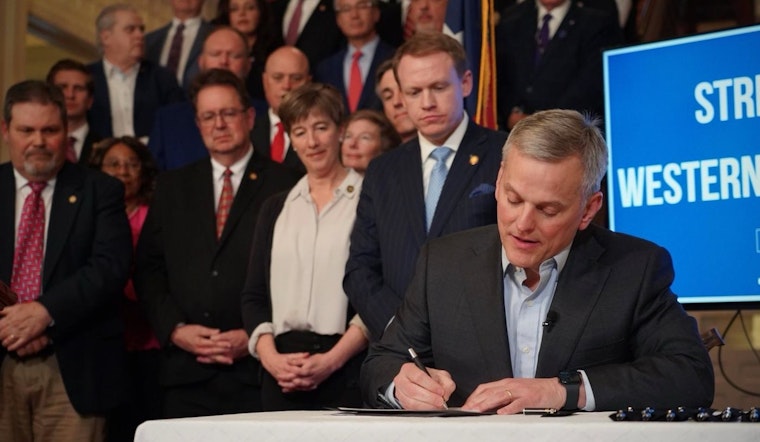
North Carolinians dealing with the aftermath of Hurricane Helene received a measure of hope as Governor Josh Stein took decisive action, signing the Disaster Recovery Act of 2025 Part 1 into law. This significant bill, the governor's first to be signed, earmarks $524 million in aid for the region battered by the natural disaster, aimed at supporting the relentless recovery efforts in western North Carolina. Stein, alongside North Carolina General Assembly leaders and regional stakeholders, confirmed the state's commitment to reconstruct and rejuvenate the communities severely impacted by the storm.
During a ceremony that included assembly members and advisers, Stein underscored the importance of the legislation. "This funding is a promising step forward in the long road to recovery for western North Carolina," as he expressed his gratitude to the General Assembly for rallying together in support of this crucial aid package. Despite the progress, Stein insisted, "we are nowhere near done," vowing to continue fighting to keep western North Carolina from being left behind. These comments were echoed in a statement obtained by the Governor's Office.
The funds allocated by the Disaster Recovery Act are comprehensive, with $200 million dedicated to aiding North Carolina farmers in recouping crop losses, and $120 million supporting a CDBG-DR Home Reconstruction and Repair program. Infrastructure grants for local governments will get a $55 million boost to aid small businesses, and $100 million is slated for repairing private roads and bridges. Additional elements of the bill include $20 million for clearing debris and $9 million to support extended learning programs for students who missed school due to Helene. The act also extends the statewide emergency declaration for the hurricane until June 30th and allocates $217 million to assist in rehousing efforts in eastern North Carolina, which had been awaiting relief.
In a move to secure future stability and preparedness, Stein continues advocating for a substantial $19 billion in federal funds, seeking to bolster infrastructure, facilitate home repair, and mitigate the effects of potential natural calamities. His efforts extend to supporting an extension of FEMA’s 100% reimbursement, providing a financial backstop for the state's arduous recovery process.



