

























































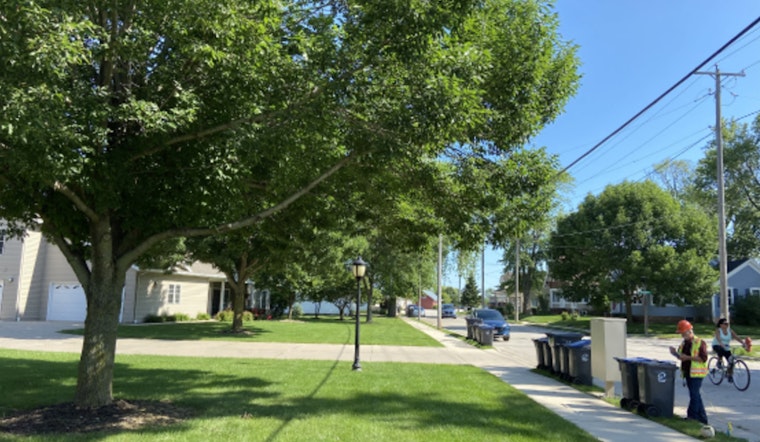
The Wisconsin Department of Natural Resources (DNR) has made public the findings from its urban forestry monitoring endeavor, shedding light on the state of Milwaukee's and Madison's green canopies. According to the recent release, this extensive project was carried out in both cities, where researchers meticulously established permanent plots across varied settings, including public and private territories. These plots have been strategically set up to gather comprehensive data on the urban trees, encompassing tree species, dimensions, cases of invasive species, and even land use.
The core outcome of this multiyear research project seems to be pointing to the larger-than-life role that big trees play in facilitating ecosystem services like purifying air and reducing runoff, largely because they possess more leaf area. "Large trees are disproportionately responsible for providing ecosystem services, such as air pollution removal and runoff reduction, because of their leaf area," the DNR stated, highlighting that in Milwaukee and Madison, trees with at least 15 inches in diameter make up about half of the city’s leaf area but represent less than 10% of the overall tree population.
When it comes to monetary benefits, trees in Milwaukee are estimated to contribute around $12.6 million annually, while Madison's trees follow closely with $11.5 million, as per the DNR data. However, not all news is lush and green; the burgeoning numbers of common buckthorn are casting a shadow over the future of native flora, notably within lightly maintained and forested zones, thereby imperiling the natural regeneration of native species.
For those hungry to delve further into the specifics, the data has also been broken down into handy resources. Milwaukee's and Madison's "Urban Forest in a Nutshell" infographics summarize key points for each city, while the "My City's Trees" tool and "Urban Forest Stats" tool allow to easily parse the collection of Urban Forest Inventory and Analysis data by specific themes or to create customized data searches.
Looking forward, this initiative does not stop with Milwaukee and Madison. Over 900 additional plots have been sown across other urban areas in Wisconsin, with the DNR aiming to release statewide results in 2026. Furthermore, the program, which operates every seven years, will track changes over time, ensuring not just a snapshot but an ongoing narrative of urban forestry health. The Urban Forest Inventory and Analysis program in Wisconsin is the progeny of a collaboration between the DNR and USDA Forest Service—its methodology takes cues from traditional forestry, adapted to better suit urban environments where 67% of the state's population resides on merely 3% of its land. Partnering with i-Tree, the project also aims to translate raw tree data into quantifiable ecosystem service estimates.





