

























































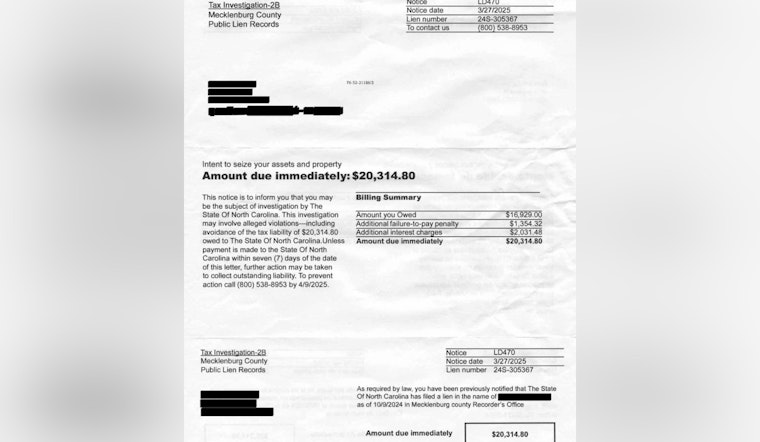
Mecklenburg County officials are urging residents to stay vigilant in the face of a potential scam involving fraudulent letters about property tax payments. These notices, falsely claiming that recipients have fallen behind on local property taxes, demand immediate payment and provide a phone number to call. The county has confirmed that the organization behind these letters is not associated with Mecklenburg County or the Office of the Tax Collector. In light of this development, officials are advising the public to exercise extreme caution before sharing any personal or financial information with unknown entities.
It's important for property owners to be aware that these scammers may reference actual property tax delinquencies—information that can to easily be found in public records. According to the Mecklenburg County's recent alert, 2024 property tax bills were considered delinquent after January 6. Those that remain unpaid were listed on the county's official tax website and were also advertised on April 6 in the Charlotte Observer, in accordance with N.C. statute.
It turns out, Mecklenburg County provides multiple legitimate programs intended to assist homeowners with their property tax bills and other financial struggles. With the recent scam attempts, understanding the difference between authorized communications and fraudulent ones is more important than ever. As a preemptive measure, homeowners should check their tax status on the county's official website before responding to any solicitations regarding unpaid taxes.
Officials are adamant that legitimate correspondence regarding property taxes will come through proper channels and not demand immediate action over the phone. "The organization demanding payment is NOT affiliated with Mecklenburg County or the Office of the Tax Collector," the Mecklenburg County emphasized in their statement. Anyone who receives a suspicious letter is encouraged to reach out directly to the Mecklenburg County Assessor's Office to verify its authenticity and to report the potential fraud to the authorities, thereby helping to swiftly counteract attempts to deceive taxpayers.





