

























































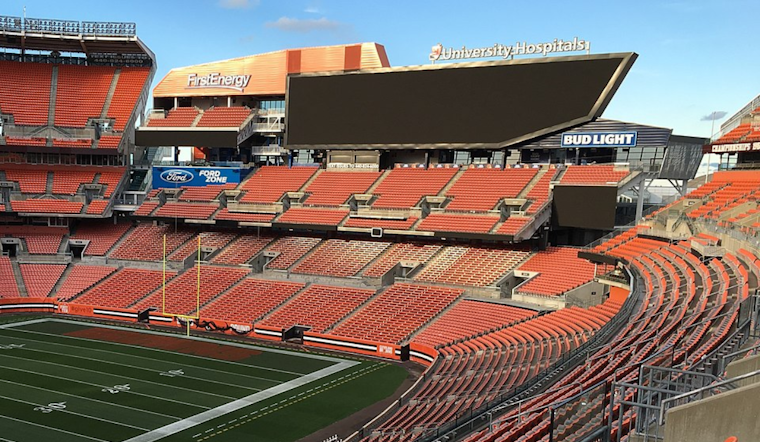
In a significant move by the Ohio House, its two-year budget proposal made strides yesterday, navigating through the legislative channels with a particularly controversial inclusion: a $600 million bond to build a domed stadium for the Cleveland Browns. Despite vocal opposition from the Democrats, the proposed budget, while slicing away at some of the governor's policy goals, pushes forward the stadium project in Brook Park, as reported by CleveScene.com.
Notably, this financial maneuver will prompt the Browns' owners to supply a substantial amount of capital upfront, purportedly to reel in the state's financial exposure, according to details provided by Cleveland.com. The orchestration of the plan within the larger state budget was not without its dramatics, marking divisions within the House Republican caucus over the earmarking of bond money for such a purpose, the discussions laid bare in a series of fractious votes.
While the budget has passed the House, it will soon encounter the state Senate, which is expected to introduce its alterations. The budget lawmakers are shaping targets for the 2026 fiscal year, commencing on July 1, with a deadline set before them to conclude their budgetary commitments, a narrative similarly chronicled by CleveScene.com.
The Republican majority carried the vote for the budget, which includes the $600 million in 30-year state-backed bonds, a financial commitment that could escalate to nearly a billion dollars over the life of the bonds, says StateNews.org. Fueled by projections from the Haslam Sports Group, advocates for the domed stadium argue that the construction, alongside the anticipated surrounding retail and residential boom, will generate $1.3 billion—exceeding the state's reimbursement costs by a significant margin. "This is consistent with our capital budget process. It's consistent with 60 years of history of issuing bonds. It's consistent with what all of our competing states are doing to attract new residents and keep our young people here," House Finance Chair Brian Stewart (R-Ashville) told StateNews.org. "And it's backed up by detailed financial metrics, under which the new tax revenue generated by this project will pay the cost of the bonds with no out-of-pocket expense for our taxpayers."
However, the House floor became a battleground with procedural tactics briefly derailing efforts to excise the bond package. Ultimately, an amendment introduced by Stewart to press the Browns' ownership for more cash upfront switched tracks, sealing the deal for this provision within the budget debate. The implication of such moves, their potential influence on the local economic landscape, and the broader political narrative continue to unfold as the budget now waits for the Senate's critique and potential modification, as detailed by StateNews.org.





