

























































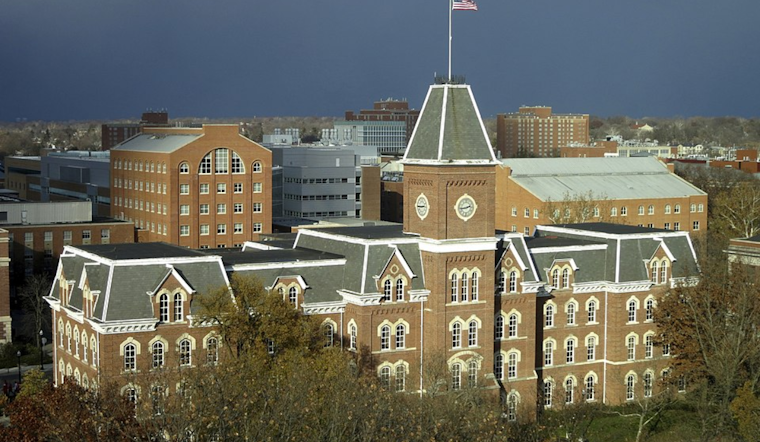
At a recent lecture at The Ohio State University, paleoartist John Gurche shared insights into the delicate and highly specialized task of breathing visual life into our long-extinct ancestors. Gurche, known for his detailed reconstructions of ancient species, spoke at the annual Paul H. and Erika Bourguignon Lecture in Art and Anthropology, detailing his method of melding science with art to reconstruct faces from the prehistoric past. His work, celebrated in institutions such as the Smithsonian and the American Museum of Natural History, often fills gaps where fossils remain silent.
During the lecture, which has been a staple event for over two decades honoring the intersection of art and anthropology, Gurche discussed his collaboration with National Geographic in crafting the face of a Denisovan, a mysterious relative of modern humans. Working with scant fossil remains discovered in Siberia in 2008, he navigated the challenges of painting a portrait of a species that existed approximately 140,000 years ago, as reported by Ohio State News.
Barbara Piperata, professor of anthropology at Ohio State, lauded Gurche's skill, stating, "With exceptional drawing, painting and sculpting skills, John reconstructs extinct species." His approach applies comparative anatomy to hypothesize about the musculature and features that once stretched over ancient hominid bones. Gurche himself reinforced this notion, saying, "I have to look at some of the major differences between ape faces and human faces when I do a reconstruction," according to Ohio State News.
The task, while rooted in science, leaves room for Gurche's artistic flair only at the end of the reconstruction process. He elaborated on the discerning application of his craft, expressing a desire for the scientific basis to drive the reconstruction, "I try to use art as little as possible because I want the science to take me as far as I can," he shared. Nevertheless, in channeling the essence of the Denisovans, Gurche imbued the reconstruction with a wary expression, reflecting the harsh realities of life nearly 150,000 years ago. "I wanted this individual to look a little bit wary," he noted via the Ohio State News, hinting at a life of struggle.
As meaningful as the scientific foundation might be, Gurche acknowledged the role his artistry plays in humanizing these ancient faces. "One of the things I have to put into my reconstruction is a feeling that there’s someone home, a feeling of presence behind the eyes," he was quoted by Ohio State News. Delving into the subtleties of facial expressions, Gurche wields his brush to grant the models a lifelike aura, bridging the vast gulf of time between the Denisovans and us, the captive audience of today.



.jpg)