

























































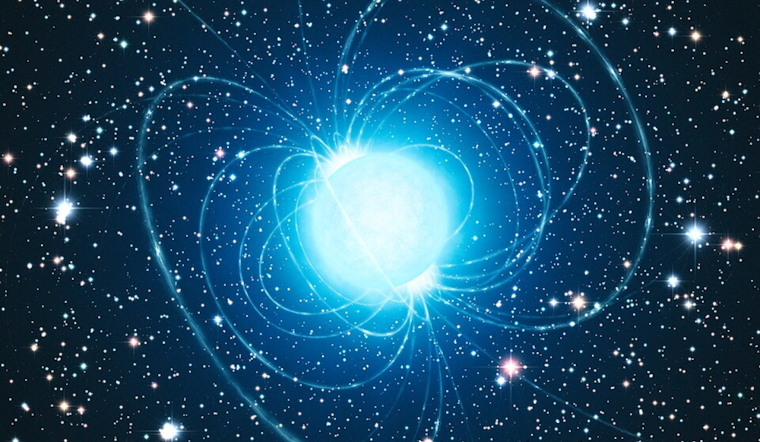
A fresh study has shed light on a new potential source of the universe's heavy elements, such as gold and uranium. Astronomers, who have long puzzled over the celestial origin of these elements, now suggest that magnetar flares could be significant contributors. This revelation stems from a reanalysis of archival data, which indicates that magnetars, the incredibly dense remnants of supernovae boasting strong magnetic fields, could account for up to 10% of heavy elements in the Milky Way. The findings were highlighted in a recent report by researchers at The Ohio State University.
Previously, the community believed that the heavy elements could only have originated from the rare and energetic collisions of neutron stars. These cosmic smash-ups were observed conclusively for the first time in 2017, when astronomers used a spectrum of instruments, including NASA telescopes and LIGO, to watch two neutron stars crash together and, in the process, form heavy metals. Yet, this mechanism alone seemed insufficient to explain the rapid production of heavy elements in the early universe. This led scientists like Todd Thompson, a professor of astronomy at The Ohio State University, to thoroughly re-examine past observations. "Neutron stars are very exotic, very dense objects that are famous for having really big, very strong magnetic fields," Thompson said in a statement obtained by The Ohio State University News.
The new study pivoted on evidence from powerful flares emitted by magnetars, particularly from an event observed 20 years ago. SGR 1806–20, a flare from a magnetar so bright its impact was measured indirectly through the reflection off the moon's surface, helped substantiate the theory that magnetars could rapidly generate heavy elements. These findings are significant, as they could help to better quickly understand not only the composition of galaxies but also the complex life cycles of stars.
It's through the r-process, a chain of nuclear reactions under extreme conditions, that such heavy elements are forged, as noted by Thompson and his team. With the novel inclusion of magnetar flares into this cosmic quandary, researchers now have a more comprehensive view of how the universe's gold, platinum, and uranium might have been originally distributed throughout the cosmos. "They're close to being black holes, but are not," Thompson told The Ohio State University News when describing the nature of neutron stars. His team's work paints a broader picture of the forces shaping our galaxy and enriches the narrative of cosmic creation.




