

























































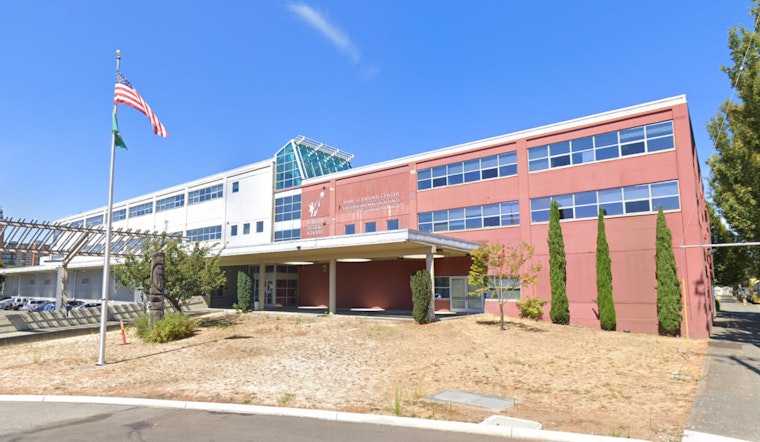
The Seattle Public Schools (SPS) has issued an apology for failing to provide American Sign Language (ASL) interpretation at a recent School Board Engagement meeting, acknowledging the lack of support for the Deaf and Hard of Hearing (DHH) community. In a statement released on the Seattle Public Schools website, Gina Topp, President of the Seattle Public Schools Board, expressed regret for the oversight which occurred last Wednesday, noting that parents from the DHH community were "not able to access the meeting and discussion—one which impacts their students and in which they had made the effort to participate."
This incident is not viewed as an isolated misstep but rather, as part of a longer history of inaccessibility to decision-making processes for the DHH community within Seattle Public Schools, a history that thwarts the democratic engagement of a community whose insights are as invaluable as they are necessary. The district's failure has sparked a commitment from the School Board to include ASL interpretation at all future board meetings, special meetings, and engagement sessions, a promise detailed on the Seattle Public Schools official communication where Topp states, "The School Board is committed to providing ASL interpretation at every regular board meeting, special meeting of the full board, and board engagement sessions."
The School Board's acknowledgment of their misstep has extended to an initiative to reach out to the DHH community to identify other district spaces and areas that lack accessibility—with the intention to remedy these issues. The promise is one aiming for an ongoing conversation, as highlighted by Topp in the apology on the Seattle Public Schools website, where she says, "We will also be reaching out to the DHH community in an effort to identify additional district spaces that are inaccessible to the DHH community and discuss how best to remedy the issue."
The sincerity behind the School Board's apology will be measured not just by words but by continuous action, a commitment articulated by Topp, her words resonate with the recognition that apologies, while necessary, lay hollow unless followed by concrete change. "We understand this is not just a single incident, but part of a longer history in Seattle Public Schools where decision making has been inaccessible to the DHH community," Topp admitted, according to Seattle Public Schools; illustrating the Board's intent to learn from past mistakes and build a stronger partnership that honors the DHH community through genuine engagement and improved service to DHH families and students in the district.





