

























































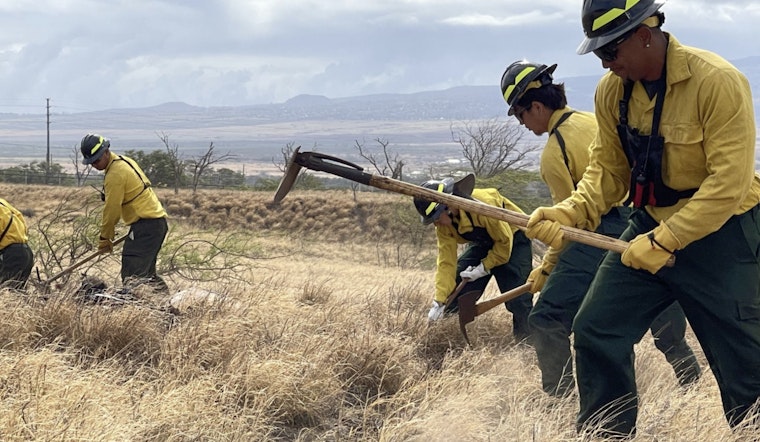
With the threat of wildfires increasing in Hawaii, state and local agencies, along with nonprofit organizations, have upped the game in fire prevention and suppression. According to a DLNR report, efforts are intensifying as the region faces worsening drought conditions, affecting an estimated 386,000 people statewide. Persistent dryness has concerned authorities and communities, especially after the destructive blazes of August 2023.
Mike Walker, state protection forester with the DLNR Division of Forestry and Wildlife (DOFAW), told those at a recent news conference, "When I started the job in 2017, DOFAW had a wildfire suppression budget of $600,000." He explained that a single fire in California could to quickly consume that amount. Since then, the division's budget had been increased to about $4 million by 2023. This funding boost comes as a direct result of what Walker described as a need to "wake up and realize we have a problem and start to address it" following the incidents such as the Lahaina fire, as reported by the DLNR.
The 2025 Wildfire & Drought LOOKOUT! campaign has rolled out, featuring radio spots, television, and social media public service announcements, alongside written and visual aides, as part of a unified effort to prevent future wildfires. The initiative supports spreading information on a broad scale as well as within communities. With more than 30 partners across the state, the campaign emphasizes collaboration and information sharing to improve Hawaii's fire safety and awareness.
Elizabeth Pickett, Co-Executive Director of the Hawai‘i Wildfire Management Organization (HWMO), noted that public engagement has significantly gone up since their low-profile operations prior to 2023. "We’ve been on the forefront of providing science-based information, education and outreach about wildfire for the past 25 years," Pickett said in the news release, adding that the Firewise USA campaign, administered by HWMO, has seen a substantial increase in community participation across Hawaii.
Investments in updated firefighting equipment have progressed slowly, with Kaua‘i Fire Chief Mike Gibson noting that fire engines typically take around four years from the time of order to delivery. The first three of six new brush trucks ordered over the past four years are expected to arrive by the end of summer 2025. While lead times remain lengthy, efforts to enhance firefighting resources are ongoing.
Acknowledging the connection between drought conditions and increased fire risk, DLNR Chair Dawn Chang, who also co-leads the state drought council, emphasized the need for water conservation efforts to support both firefighting capabilities and the preservation of drinking water supplies. Chang and Pickett stressed the importance of a coordinated approach that includes government agencies, private industry, and agricultural stakeholders. They highlighted the need for collaboration to address the challenges posed by wildfires and drought across Hawai‘i.





